
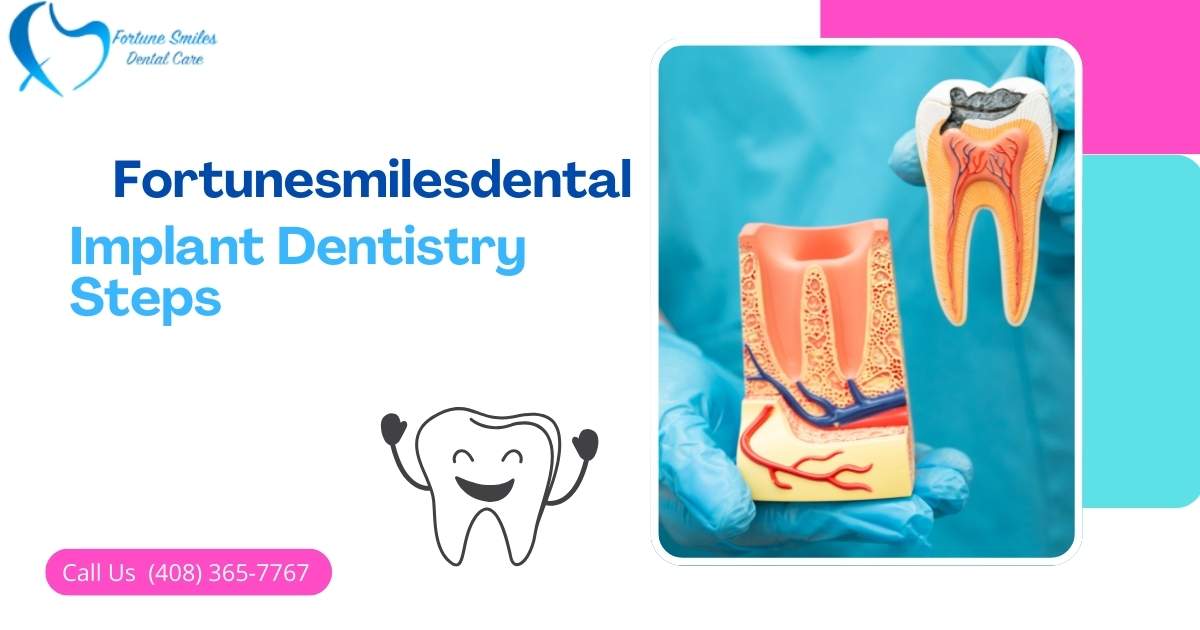
Dental implants have become one of the most reliable and natural-looking solutions for replacing missing teeth. If you’re considering implants, one of the most common questions patients ask is:
“What are the actual steps of implant dentistry?”
In this two-part guide, we’ll walk you through the entire implant dentistry process, from your first consultation to the final restored smile—so you know exactly what to expect and can feel confident at every stage.
What Is Implant Dentistry?
Implant dentistry is a specialized field of restorative dentistry focused on replacing missing teeth using dental implants—small titanium posts that act as artificial tooth roots. These implants integrate with your jawbone and support crowns, bridges, or full-arch restorations.
Unlike dentures or traditional bridges, dental implants:
- Preserve jawbone health
- Feel and function like natural teeth
- Do not rely on neighboring teeth for support
- Offer long-term stability and durability
Understanding the steps of implant dentistry helps patients prepare both physically and mentally for treatment.
Ready to Restore Your Smile with Dental Implants
If you’re missing one or more teeth, implant dentistry can give you a strong, natural-looking smile that lasts for decades
Our experienced team will guide you through every step—from consultation to final crown—with comfort, precision, and care
Trusted implant care • Advanced technology • Patient-first approach
Step 1: Initial Consultation & Comprehensive Evaluation
Every successful implant case begins with a thorough evaluation. This step is critical and cannot be rushed.
During your consultation, your dentist will:
- Examine your teeth, gums, and bite
- Review your medical and dental history
- Take digital X-rays or 3D CBCT scans
- Evaluate bone density and jaw structure
- Discuss your goals, concerns, and expectations
This is also when your dentist determines whether you’re a candidate for dental implants or if preparatory treatments are needed.
Expert insight:
A well-planned implant starts with diagnostics, not surgery. Skipping this step is one of the biggest reasons implants fail elsewhere.
Step 2: Treatment Planning & Customization
Implant dentistry is never one-size-fits-all. Based on your evaluation, your dentist creates a personalized implant treatment plan.
This plan includes:
- Number of implants needed
- Implant placement locations
- Type of restoration (single crown, bridge, full arch)
- Timeline and phases of treatment
- Sedation or anesthesia options
- Cost and insurance considerations
Advanced digital planning ensures precise placement, protecting nerves, sinuses, and surrounding structures.
Step 3: Preparatory Procedures (If Needed)
Not every patient is immediately ready for implant placement. Some require preparatory steps to ensure long-term success.
Common preparatory treatments include:
- Tooth extraction (if a damaged tooth is still present)
- Bone grafting to rebuild insufficient jawbone
- Sinus lift for upper back teeth
- Gum disease treatment to ensure healthy tissue
While these steps may extend the timeline, they significantly increase implant success rates.
Step 4: Dental Implant Placement Surgery
This is the step most patients worry about—but it’s usually far easier than expected.
What happens during implant placement:
- Local anesthesia or sedation is administered
- A small opening is made in the gum
- The titanium implant is placed into the jawbone
- The site is closed with sutures
The procedure is typically completed in under an hour per implant, and most patients report minimal discomfort afterward.
Pain reality:
Most patients say implant placement feels easier than a tooth extraction.
Step 5: Healing & Osseointegration
After the implant is placed, your body begins a natural process called osseointegration—where bone cells fuse to the implant surface.
This phase:
- Takes approximately 3–6 months
- Creates a strong, stable foundation
- Is essential for long-term implant success
During this time, patients may wear a temporary tooth so aesthetics and function are maintained.
Step 6: Abutment Placement
Once osseointegration is complete, the next step is attaching the abutment.
What is an abutment?
The abutment is a small connector that sits on top of the implant and holds the final crown or restoration.
The process includes:
- Minor reopening of the gum (if needed)
- Attaching the abutment to the implant
- Allowing gums to heal around it (1–2 weeks)
In some cases, the abutment is placed at the same time as the implant—depending on your treatment plan.
Step 7: Digital Impressions & Restoration Design
Now comes the exciting part—designing your new tooth.
Your dentist will:
- Take digital impressions or scans
- Match tooth color, shape, and size
- Design a crown that blends seamlessly with your smile
This ensures your implant crown looks natural, balanced, and indistinguishable from surrounding teeth.
Step 8: Final Crown, Bridge, or Full-Arch Placement
Once your custom restoration is ready, it’s securely attached to the abutment.
Restoration options include:
- Single implant crown
- Implant-supported bridge
- Full-arch implant dentures (All-on-4 / All-on-6)
Your dentist checks:
- Bite alignment
- Comfort and stability
- Aesthetic harmony
At this point, your implant is fully functional—allowing you to chew, speak, and smile confidently again.
Step 9: Recovery & Post-Treatment Care
After final placement, most patients resume normal activities within a day.
Post-implant care includes:
- Gentle brushing and flossing
- Avoiding excessive force initially
- Attending follow-up visits
- Using a night guard if recommended
Implants do not decay, but gum health is critical. Proper care ensures longevity.
Step 10: Long-Term Maintenance & Follow-Ups
Dental implants can last 20+ years or even a lifetime with proper care.
Long-term success depends on:
- Regular dental checkups
- Professional cleanings
- Healthy lifestyle habits
- Managing conditions like grinding or gum disease
Implant dentistry is not just about placement—it’s about preserving your restored smile for decades.
Why Implant Dentistry Is Worth the Process
Although implant dentistry involves multiple steps, each phase plays a vital role in:
- Stability
- Comfort
- Longevity
- Natural aesthetics
Compared to removable dentures or traditional bridges, implants offer unmatched benefits in both function and confidence.
Final Thoughts
Understanding the implant dentistry steps removes fear and uncertainty from the process. When performed with proper planning, modern technology, and expert care, dental implants are one of the most predictable and life-changing treatments in dentistry.