
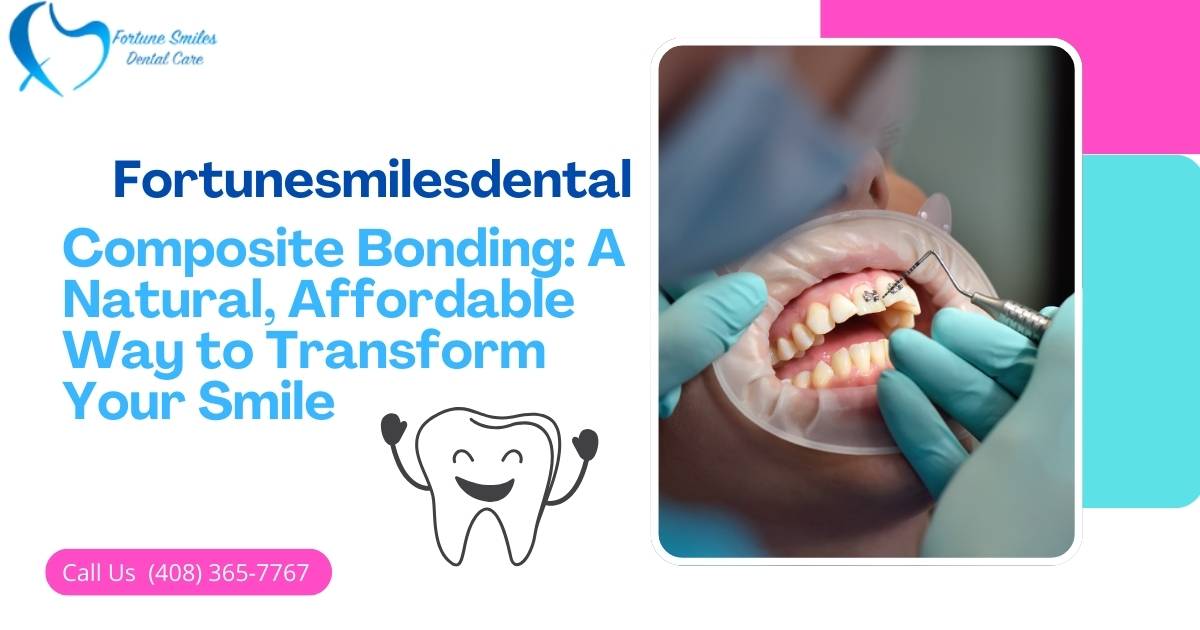
Composite bonding is one of the most versatile and conservative cosmetic dental treatments available today. Whether you’re dealing with chipped teeth, small gaps, discoloration, or worn enamel, composite bonding can dramatically improve your smile—often in just one visit.
At Fortune Smiles Dental, we use advanced cosmetic and biomimetic dentistry principles to ensure composite bonding looks natural, feels comfortable, and preserves as much of your natural tooth structure as possible.
This guide explains what composite bonding is, how it works, who it’s best for, how long it lasts, and how it compares to other cosmetic dental treatments—so you can make a confident, informed decision.
What Is Composite Bonding?
Composite bonding (also called cosmetic dental bonding or tooth bonding) is a procedure where a tooth-colored composite resin is applied directly to the tooth, shaped by the dentist, and hardened using a special curing light.
The material bonds securely to your natural enamel, allowing us to:
-
Repair chipped or cracked teeth
-
Close small gaps between teeth
-
Improve tooth shape or length
-
Cover stains that don’t respond to whitening
-
Restore worn or thin enamel
Unlike crowns or veneers, composite bonding usually requires little to no drilling, making it one of the most conservative cosmetic dentistry options.
How Does Composite Bonding Work?
The composite bonding process is straightforward, comfortable, and efficient:
-
Smile evaluation – We assess your teeth, bite, enamel health, and cosmetic goals
-
Shade matching – The composite is carefully matched to your natural tooth color
-
Tooth preparation – Minimal surface conditioning (no major enamel removal)
-
Resin application – The composite material is layered and sculpted
-
Curing & polishing – A special light hardens the material, followed by detailed polishing
In most cases, composite bonding is completed in a single appointment.
What Dental Problems Can Composite Bonding Fix?
Composite bonding is ideal for minor to moderate cosmetic concerns, including:
-
Chipped front teeth
-
Gaps between teeth (diastema)
-
Uneven or misshapen teeth
-
Short or worn teeth from grinding
-
Discoloration or staining
-
Enamel erosion
-
Small cavities or old fillings replacement
Because bonding preserves natural tooth structure, it aligns perfectly with preventive and biomimetic dentistry philosophies.
Composite Bonding vs Veneers vs Crowns
Many patients ask which cosmetic option is best. Here’s how composite bonding compares:
-
Composite Bonding
-
Conservative
-
Lower cost
-
Same-day results
-
Reversible in many cases
-
-
Porcelain Veneers
-
Longer lifespan
-
More stain-resistant
-
Requires enamel removal
-
Higher cost
-
-
Dental Crowns
-
Best for heavily damaged teeth
-
Requires significant tooth reduction
-
Functional + cosmetic
-
At Fortune Smiles Dental, we recommend bonding only when it’s the right solution, not when a crown or veneer would be more appropriate long-term.
How Long Does Composite Bonding Last?
On average, composite bonding lasts 5–7 years, but many patients enjoy their results longer with proper care.
Longevity depends on:
-
Oral hygiene habits
-
Grinding or clenching (bruxism)
-
Diet (coffee, wine, smoking)
-
Bite alignment
-
Regular dental visits
Bonding can be repaired or refreshed, unlike veneers or crowns, which often require full replacement.
Is Composite Bonding Safe for Teeth?
Yes—when performed correctly.
Composite bonding:
-
Does not weaken healthy teeth
-
Preserves enamel
-
Avoids aggressive drilling
-
Is fully biocompatible
Problems usually arise when bonding is:
-
Overused instead of orthodontics
-
Placed on unstable teeth
-
Done without proper bite evaluation
That’s why choosing an experienced cosmetic dentist matters.
Composite Bonding Cost: What to Expect
The cost of composite bonding varies based on:
-
Number of teeth treated
-
Complexity of shaping
-
Location of the tooth (front vs back)
-
Dentist expertise
In general, composite bonding is one of the most affordable cosmetic dentistry treatments, especially compared to veneers or crowns.
At Fortune Smiles Dental, we provide transparent pricing and personalized treatment plans—no surprises.
Does Composite Bonding Look Natural?
When done properly, yes—extremely natural.
Modern composite materials mimic:
-
Natural translucency
-
Light reflection
-
Enamel texture
Our dentists sculpt bonding by hand, layer by layer, ensuring your smile doesn’t look “fake” or bulky.
Caring for Composite Bonded Teeth
To extend the life of your bonding:
-
Brush twice daily with non-abrasive toothpaste
-
Floss daily
-
Avoid biting hard objects (ice, pens)
-
Limit staining foods and drinks
-
Wear a night guard if you grind your teeth
-
Visit your dentist regularly
Bonded teeth should be treated like natural teeth—with care and respect.
Is Composite Bonding Right for You?
Composite bonding is an excellent choice if you:
-
Want fast cosmetic improvement
-
Prefer a conservative, enamel-preserving option
-
Have minor to moderate cosmetic concerns
-
Want an affordable smile upgrade
-
Value natural-looking results
However, it may not be ideal for severe bite issues, heavy grinding, or major structural damage.
Composite Bonding at Fortune Smiles Dental
At Fortune Smiles Dental, composite bonding is never a “quick fix.”
We combine cosmetic artistry, biomimetic principles, and long-term oral health planning to ensure your smile is both beautiful and functional.
Our approach focuses on:
-
Preserving natural teeth
-
Improving smile aesthetics
-
Supporting preventive dentistry
-
Delivering durable, natural results
Final Thoughts
Composite bonding is a powerful, minimally invasive way to enhance your smile while protecting your natural teeth. When planned carefully and executed by an experienced dentist, it offers outstanding cosmetic results without unnecessary tooth damage.
If you’re considering composite bonding and want expert guidance tailored to your smile, a professional evaluation is the best next step.
A confident smile doesn’t always require major dentistry—sometimes, small changes make the biggest difference.