
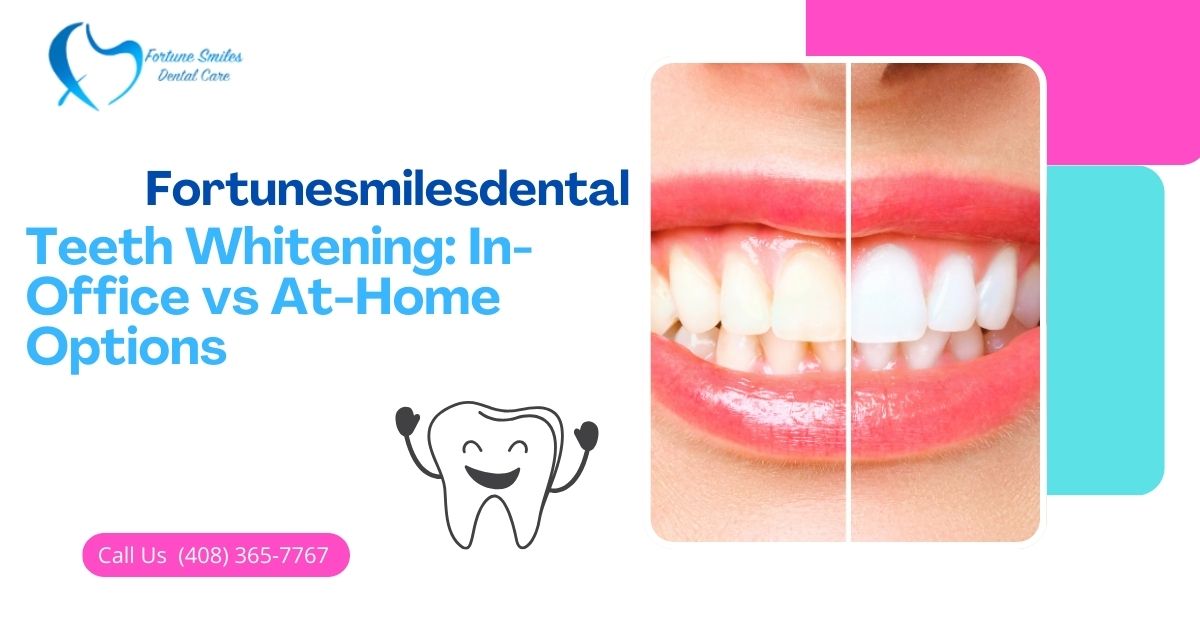
A brighter smile is one of the simplest ways to boost confidence. Whether you’re preparing for a special event or just want to refresh your appearance, teeth whitening is one of the most popular cosmetic dentistry treatments today.
But once you start researching, you’ll quickly run into a common question:
Should you choose professional in-office teeth whitening or at-home whitening options?
Both methods can improve the color of your teeth, but they differ significantly in speed, strength, safety, and long-term results. Understanding these differences will help you make the best choice for your smile, budget, and lifestyle.
In this guide, we’ll break down how each option works, their pros and cons, and how to decide which whitening method is right for you.
Why Teeth Become Stained in the First Place
Tooth discoloration happens gradually and for many reasons, including:
-
Coffee and tea
-
Red wine
-
Dark-colored foods
-
Tobacco use
-
Aging
-
Poor oral hygiene
-
Certain medications
-
Enamel thinning
Over time, stains penetrate the enamel and dentin layers of the tooth. While brushing helps remove surface stains, it cannot eliminate deeper discoloration. That’s where whitening treatments come in.
What Is In-Office Teeth Whitening?
In-office teeth whitening is a professional cosmetic dentistry procedure performed by a dentist. It uses high-concentration whitening agents that are far stronger than anything available over the counter.
How In-Office Whitening Works
-
Your dentist examines your teeth and gums to ensure whitening is safe for you
-
Gums and soft tissues are protected
-
A professional-strength whitening gel is applied
-
A special light or activation system may be used
-
The process is repeated in short cycles
-
Results are visible immediately
Most appointments take about 60–90 minutes.
Benefits of In-Office Teeth Whitening
-
Immediate results
-
Dramatically whiter teeth in one visit
-
Supervised by a dental professional
-
Customized to your tooth sensitivity level
-
Safer for enamel and gums
-
Even, natural-looking whitening
Considerations
-
Higher upfront cost
-
Requires a dental visit
For patients who want fast, predictable results, professional whitening is often the best choice.
What Are At-Home Teeth Whitening Options?
At-home whitening includes a variety of methods designed to lighten tooth color gradually.
Common At-Home Whitening Methods
-
Whitening toothpaste
-
Whitening strips
-
Whitening gels with trays
-
LED whitening kits
-
Dentist-provided custom whitening trays
How At-Home Whitening Works
Most at-home systems use lower concentrations of peroxide-based gels. Over time, repeated applications lighten stains.
Depending on the product, treatment can take anywhere from a few days to several weeks.
Benefits of At-Home Whitening
-
Lower cost
-
Convenient
-
Can be done on your schedule
-
Good for mild discoloration
Considerations
-
Results take longer
-
Less dramatic whitening
-
One-size-fits-all trays may cause uneven results
-
Greater risk of gum irritation if misused
-
No professional monitoring
At-home whitening works best for people with mild staining who are patient and consistent.
In-Office vs At-Home Teeth Whitening: Side-by-Side Comparison
Speed
-
In-office: Same-day results
-
At-home: Gradual over weeks
Strength
-
In-office: High-strength professional gel
-
At-home: Lower-strength gel
Customization
-
In-office: Fully customized
-
At-home: Limited customization
Safety
-
In-office: Dentist supervised
-
At-home: User-dependent
Results
-
In-office: More dramatic and even
-
At-home: Subtle to moderate
Cost
-
In-office: Higher initial cost
-
At-home: Lower cost
Which Whitening Option Is Best for You?
There’s no one-size-fits-all answer. The right choice depends on your goals, oral health, and expectations.
You May Be a Good Candidate for In-Office Whitening If:
-
You want fast results
-
You have moderate to severe stains
-
You want professional supervision
-
You have an upcoming event
-
You’ve tried over-the-counter products without success
You May Prefer At-Home Whitening If:
-
Your stains are mild
-
You prefer gradual whitening
-
You’re on a tighter budget
-
You already had in-office whitening and want maintenance
Many patients choose a combination approach: professional in-office whitening for initial results, followed by custom at-home trays for maintenance.
Is Teeth Whitening Safe?
When performed correctly, teeth whitening is considered safe.
Professional whitening systems are designed to:
-
Protect enamel
-
Minimize sensitivity
-
Avoid gum damage
Problems usually occur when people overuse or misuse over-the-counter products.
Common temporary side effects may include:
-
Tooth sensitivity
-
Mild gum irritation
These usually resolve within a few days.
If you have cavities, gum disease, or cracked teeth, these should be treated before whitening.
How Long Do Whitening Results Last?
Results vary based on lifestyle and oral habits.
On average:
-
In-office whitening: 1–3 years
-
At-home whitening: Several months to a year
You can extend results by:
-
Brushing twice daily
-
Flossing daily
-
Limiting staining foods and drinks
-
Using a straw for dark beverages
-
Rinsing after coffee or wine
-
Attending regular dental cleanings
Maintenance whitening once or twice a year helps preserve brightness.
Teeth Whitening and Dental Restorations
Whitening only affects natural tooth enamel. It does not whiten:
-
Crowns
-
Veneers
-
Fillings
-
Bonding
If you have visible restorations, your dentist may recommend replacing them after whitening to match your new shade.
This is another reason professional guidance matters.
Can Everyone Whiten Their Teeth?
Not all discoloration responds to whitening.
Whitening may be less effective for:
-
Intrinsic stains (from medication or trauma)
-
Gray or brown discoloration
-
Teeth with thin enamel
A dental evaluation helps determine whether whitening or another cosmetic option (such as veneers or bonding) would be better.
Why Choose Professional Whitening at Fortune Smiles Dental
At Fortune Smiles Dental, we focus on safe, conservative cosmetic dentistry that preserves natural tooth structure while delivering beautiful results.
Our professional whitening treatments are:
-
Customized to your teeth
-
Designed to minimize sensitivity
-
Performed with advanced materials
-
Monitored by experienced clinicians
We also offer guidance on maintenance and long-term smile care.
Schedule a Teeth Whitening Consultation in San Jose
If you’re ready to brighten your smile, we’re here to help.
Fortune Smiles Dental
📍 San Jose, CA
📞 Call: (408) 365-7767
🌐 https://fortunesmilesdental.com/
Book a consultation today and discover whether in-office whitening, at-home options, or a combination approach is best for you.