
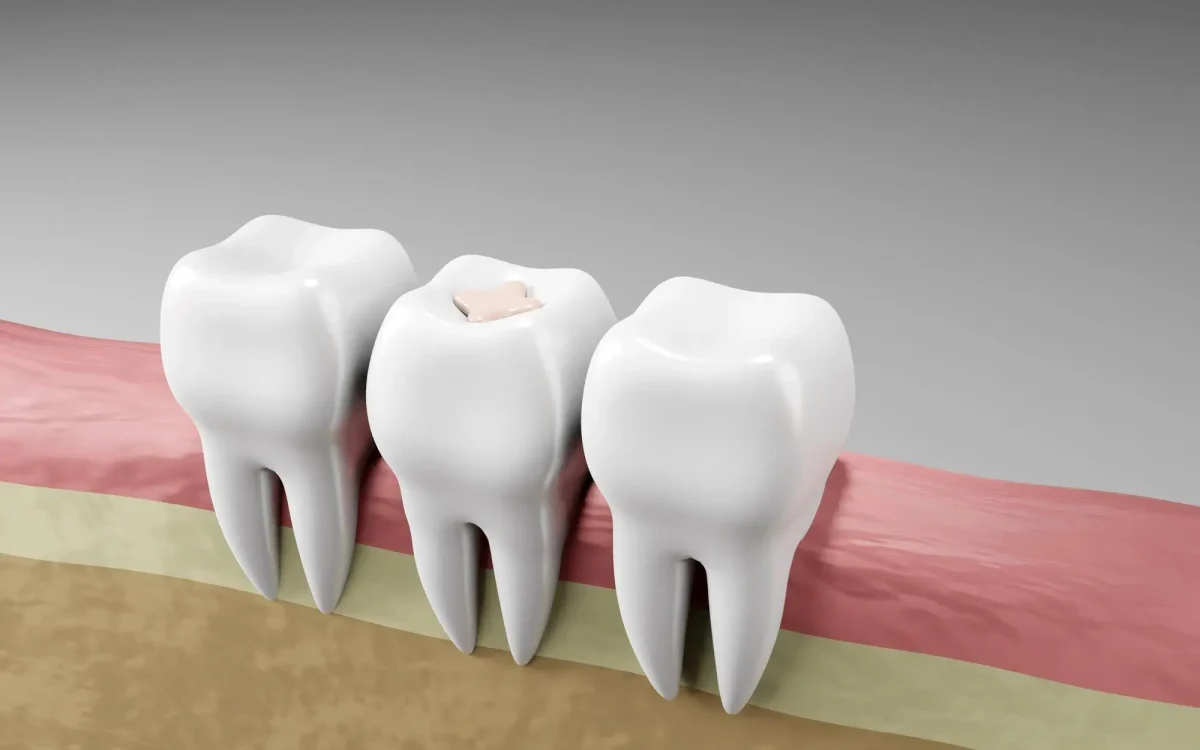
Dental restorations have evolved significantly over the years. Today, dentists aim to preserve as much natural tooth structure as possible while restoring strength and function. Composite inlays and onlays are among the most conservative and aesthetically pleasing solutions used to repair moderately damaged teeth.
These restorations are commonly recommended when a tooth is too damaged for a traditional filling but not damaged enough to require a full dental crown.
In this guide, we will explore everything you need to know about composite inlays and onlays, including their benefits, procedure, durability, and when dentists recommend them.
What Are Composite Inlays and Onlays?
Composite inlays and onlays are indirect dental restorations made from high-quality composite resin material. They are custom fabricated to restore teeth that have moderate decay or damage.
Unlike traditional fillings that are applied directly into the cavity, inlays and onlays are created outside the mouth, usually in a dental laboratory or using CAD/CAM technology, and then bonded to the tooth.
These restorations provide a stronger and more precise fit compared to standard fillings.
Difference Between Inlays and Onlays
Although the terms are often used together, they restore different parts of the tooth.
Dental Inlays
A composite inlay fits within the grooves of the tooth and does not cover the cusps.
They are typically used when:
- decay is located in the center of the tooth
- the tooth structure is still mostly intact
- a filling would be too large for long term durability
Dental Onlays
A composite onlay covers a larger portion of the tooth and may extend over one or more cusps.
Dentists usually recommend onlays when:
- the tooth has more extensive damage
- cusps need reinforcement
- a crown would remove too much healthy tooth structure
Because of this, onlays are often referred to as partial crowns.
Benefits of Composite Inlays and Onlays
Composite inlays and onlays offer several advantages compared with traditional fillings or full crowns.
1. Preservation of Natural Tooth Structure
One of the biggest advantages is that dentists can remove less healthy tooth tissue compared with crowns.
2. Natural Appearance
Composite material closely matches the color of natural teeth, making the restoration almost invisible.
This makes them ideal for visible teeth or patients who prioritize aesthetics.
3. Stronger Than Large Fillings
Large fillings can weaken the tooth over time. Inlays and onlays distribute chewing forces more evenly, which helps protect the tooth.
4. Improved Fit and Precision
Because they are fabricated outside the mouth, they provide a more precise fit than traditional fillings.
5. Reduced Risk of Tooth Fracture
By strengthening weakened areas of the tooth, onlays help reduce the chance of cracks and fractures.
When Dentists Recommend Composite Inlays or Onlays
A dentist may recommend this treatment in several situations.
Common cases include:
- moderate tooth decay
- fractured teeth
- replacing old large fillings
- restoring worn teeth
- strengthening weakened cusps
They are especially useful when a tooth does not require a crown but needs more support than a filling can provide.
Procedure for Composite Inlays and Onlays
The treatment usually requires two dental visits.
First Visit: Tooth Preparation
During the first appointment, the dentist will:
- Remove decayed or damaged tooth structure
- Clean and shape the cavity
- Take an impression or digital scan of the tooth
- Place a temporary restoration
The impression is then sent to a dental lab where the custom restoration is fabricated.
Second Visit: Placement
During the second appointment:
- The temporary filling is removed
- The dentist checks the fit of the inlay or onlay
- The restoration is bonded to the tooth using dental adhesive
- The bite is adjusted and polished
Once bonded, the restoration becomes a strong and functional part of the tooth.
How Long Do Composite Inlays and Onlays Last?
With proper care, composite inlays and onlays typically last 5 to 10 years, though many can last longer.
Their lifespan depends on several factors:
- oral hygiene habits
- teeth grinding
- diet
- regular dental checkups
- quality of the restoration
Avoiding very hard foods and maintaining good oral hygiene can significantly extend their durability.
Composite Inlays vs Porcelain Inlays
Dentists may offer both composite and porcelain restorations.
Here are some key differences.
| Feature | Composite Inlays | Porcelain Inlays |
|---|---|---|
| Appearance | Natural looking | Highly aesthetic |
| Cost | More affordable | Higher cost |
| Durability | Moderate | Very strong |
| Repairability | Easier to repair | Harder to repair |
Composite restorations are often chosen when cost and conservative treatment are priorities.
How Much Do Composite Inlays and Onlays Cost?
The cost can vary depending on several factors.
Typical factors include:
- location of the dental clinic
- complexity of the restoration
- dentist experience
- lab fees
- dental insurance coverage
On average, composite inlays or onlays can cost between $250 and $800 per tooth, but prices may vary depending on the region.
Caring for Composite Inlays and Onlays
Proper care is essential to maintain your restoration.
Dentists typically recommend:
- brushing twice daily
- flossing every day
- avoiding chewing ice or very hard foods
- wearing a night guard if you grind your teeth
- visiting the dentist regularly for checkups
These habits help protect both the restoration and the natural tooth structure.
Are Composite Inlays and Onlays Worth It?
For many patients, composite inlays and onlays offer an excellent balance between conservative treatment, aesthetics, and durability.
They preserve more natural tooth structure than crowns while providing stronger support than large fillings.
When performed by an experienced dentist, they can restore both function and appearance while extending the life of the tooth.
FAQ
What is the difference between a dental inlay and onlay?
A dental inlay fits inside the grooves of the tooth and does not cover the cusps, while an onlay extends over one or more cusps and restores a larger portion of the tooth.
Are composite inlays better than fillings?
Composite inlays are often stronger and more durable than large fillings because they are custom fabricated and bonded precisely to the tooth.
Do inlays and onlays require anesthesia?
Yes, dentists typically use local anesthesia during tooth preparation to ensure the patient feels comfortable during the procedure.
How long does it take to get an inlay or onlay?
The treatment usually requires two appointments over one to two weeks, although some clinics can provide same day restorations using digital dentistry.