
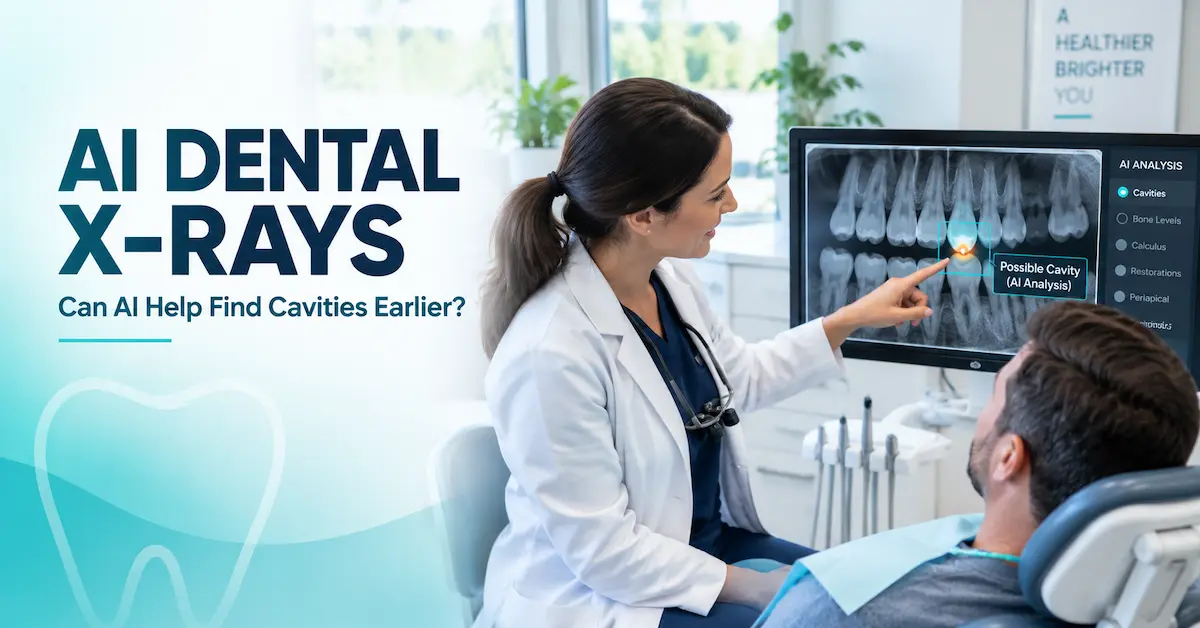
Artificial intelligence is becoming part of many areas of healthcare, and dentistry is no exception. One of the most talked-about uses is AI dental X-ray analysis, where software helps dentists review radiographs and highlight areas that may need closer attention.
For patients, the big question is simple: can AI help dentists find cavities earlier? The short answer is that AI may support earlier detection by helping dentists identify suspicious areas on dental X-rays. However, AI does not replace a dentist. It is a tool that supports clinical judgment, patient education, and treatment planning.
At Fortune Smiles Dental Care, technology is valuable when it helps patients understand their oral health more clearly. Whether a cavity is found by a dentist, X-ray, visual exam, or AI-assisted imaging, the goal is the same: detect problems early, preserve natural tooth structure, and avoid more complex treatment whenever possible. You can learn more about prevention-focused care on our preventive dentistry page.
Quick Answer: Can AI Dental X-Rays Detect Cavities?
AI can help analyze dental X-rays and mark areas that may look suspicious for cavities, bone loss, calculus, infections, or other dental concerns depending on the software used. A dentist still reviews the image, examines the patient, considers symptoms, and makes the final diagnosis.
- AI can help highlight early or subtle changes on X-rays.
- The dentist still decides whether treatment is needed.
- AI may improve consistency when comparing images over time.
- Patients may understand findings better when areas are visually outlined.
- AI is a support tool, not an independent dentist.
What Are AI Dental X-Rays?
AI dental X-rays are regular dental radiographs reviewed with the help of artificial intelligence software. The X-ray itself is taken in the normal way. The AI system then analyzes the image and may identify patterns that are commonly associated with cavities, bone loss, root infections, existing restorations, or other findings.
The software may place colored outlines, boxes, measurements, or markers on the image. These visual cues help the dentist focus on areas that deserve attention. They can also make the conversation easier for patients because the problem area is easier to see on the screen.
This does not mean every highlighted area is automatically a cavity. Dental diagnosis still requires human evaluation, clinical examination, patient history, and professional judgment.
Traditional X-Ray Review vs AI-Assisted X-Ray Review
| Area | Traditional Review | AI-Assisted Review |
|---|---|---|
| Image reading | Dentist reviews the X-ray manually. | AI highlights areas for the dentist to review. |
| Cavity detection | Depends on image quality, experience, and clinical exam. | May help flag subtle patterns that deserve attention. |
| Patient education | Dentist explains the X-ray findings verbally. | Visual markers may make the issue easier to understand. |
| Final diagnosis | Made by the dentist. | Still made by the dentist. |
How Can AI Help Find Cavities Earlier?
Cavities do not always appear as obvious holes. In the early stages, tooth decay may show as a small shadow or subtle change between teeth or under an existing filling. These areas can be difficult for patients to see and sometimes challenging to explain without visual support.
AI tools are trained to recognize patterns in dental images. When the software detects a pattern that may be consistent with tooth decay, it can highlight the area for the dentist. This second layer of review may help dentists examine suspicious spots more carefully and compare them with previous images.
Early detection matters because small cavities may be treated more conservatively than advanced decay. If a cavity is caught before it reaches deeper tooth structure, the patient may avoid larger fillings, crowns, root canals, or emergency dental pain. If you want to understand warning signs before decay becomes severe, read our guide on early signs of tooth decay.
What AI May Help Dentists See on X-Rays
- Early cavities between teeth
- Decay under or around older fillings
- Bone loss related to gum disease
- Calculus or buildup below the gumline
- Changes around crowns, bridges, or implants
- Possible infection near the root tip
- Comparison changes between older and newer X-rays
Does AI Replace the Dentist?
No. AI does not replace the dentist. Dental X-rays are only one part of diagnosis. A dentist also checks the mouth directly, evaluates symptoms, reviews dental history, examines the bite, considers risk factors, and decides whether the finding needs monitoring, prevention, or treatment.
Sometimes an area may look suspicious on an X-ray but not require immediate treatment. In other cases, a small finding may be important because the patient has sensitivity, high cavity risk, dry mouth, or a history of fast-progressing decay. AI cannot fully understand all of these personal details on its own.
The best use of AI is as a clinical support tool. It can help dentists review images more consistently and help patients understand why a recommendation is being made.
Benefits of AI Dental X-Rays for Patients
Clearer Explanations
Highlighted areas can make dental findings easier to see and understand during the visit.
Earlier Conversations
Small changes can be discussed before they turn into pain or emergency treatment.
More Confidence
Patients can ask better questions when they can see the same area the dentist is reviewing.
Better Monitoring
AI-assisted review may help compare dental findings across visits over time.
Why Early Cavity Detection Matters
A small cavity is usually easier to treat than a large cavity. When decay is limited, treatment may involve a smaller filling or preventive measures depending on the stage. When decay spreads deeper, it can weaken the tooth, cause sensitivity, reach the nerve, and require more extensive care.
Early detection also gives patients time to improve daily habits. Fluoride toothpaste, better flossing, diet changes, dry-mouth management, and more consistent cleanings may help slow or prevent future decay.
That is why regular dental checkups are important even when nothing hurts. Pain usually appears later, not at the beginning of the cavity process. Learn more about the value of routine visits in our article on regular dental checkups.
AI Dental X-Rays and Patient Trust
Many patients feel unsure when a dentist points to a gray shadow on an X-ray. AI-assisted visuals may help make those conversations more transparent. When an area is outlined or measured, patients may better understand why the dentist is watching a tooth or recommending treatment.
This is especially helpful for patients who want to avoid unnecessary dental work. AI can support the conversation, but it should not create pressure. A responsible dentist should explain what the image shows, what the clinical exam shows, what the treatment options are, and whether the issue can be monitored.
Technology should make dental care clearer, not more confusing.
Important Limitations of AI in Dentistry
AI is not perfect. It depends on image quality, training data, software design, and proper clinical use. It may flag areas that are not cavities, or it may miss something that needs attention. That is why AI should always be used under professional supervision.
- AI cannot feel a tooth, test sensitivity, or examine gums directly.
- AI cannot understand every patient’s symptoms or risk factors on its own.
- AI findings still need dentist confirmation.
- AI should support diagnosis, not replace human care.
Are AI Dental X-Rays Safe?
AI does not add radiation to the X-ray. The dental radiograph is taken using standard imaging equipment. The artificial intelligence software reviews the image after it is captured. In other words, AI is part of the image analysis process, not an extra X-ray exposure.
Dental X-rays should still be taken only when appropriate based on the patient’s age, oral health, symptoms, risk level, and treatment needs. A dentist decides when X-rays are necessary and how often they should be updated.
Patients can always ask why an X-ray is recommended and what information the dentist expects to gain from it.
Who May Benefit Most from AI-Assisted Dental Imaging?
| Patient Type | Why AI Review May Help |
|---|---|
| Patients with frequent cavities | Small changes can be monitored closely between visits. |
| Patients with many fillings or crowns | AI may help flag suspicious margins around old restorations. |
| Patients with gum disease risk | Bone level changes may be easier to visualize and explain. |
| Patients who feel unsure about treatment | Highlighted X-rays may make recommendations easier to understand. |
| Preventive-care patients | Early warnings can support better home care and follow-up. |
Can AI Help Prevent Root Canals?
AI does not prevent root canals by itself. But earlier detection of decay may help patients treat problems before they reach the nerve of the tooth. When a cavity is ignored or missed until it becomes deep, the chance of needing root canal treatment increases.
The real prevention strategy is a combination of regular exams, appropriate X-rays, good brushing and flossing, fluoride use, diet control, and timely treatment when needed.
AI may be one more tool that helps dentists and patients act earlier.
Questions to Ask Your Dentist About AI X-Rays
- What does the highlighted area on my X-ray mean?
- Is this definitely a cavity or something we should monitor?
- How does the AI finding compare with your clinical exam?
- Can we compare this X-ray with my older images?
- What are my treatment options?
- Can prevention still help, or does this need a filling?
- How can I lower my cavity risk going forward?
How Patients Can Lower Cavity Risk With or Without AI
AI can help review dental images, but daily habits still matter most. Brush twice a day with fluoride toothpaste, clean between your teeth daily, limit frequent sugar exposure, drink water, and keep up with professional cleanings.
Patients with dry mouth, acid reflux, many fillings, braces, aligners, or a history of frequent cavities may need a more personalized prevention plan. That plan may include fluoride treatments, prescription toothpaste, diet guidance, or more frequent checkups.
For practical prevention tips, read our guide on preventing cavities between dental visits.
Want Clearer Answers About Your Dental X-Rays?
Fortune Smiles Dental Care can review your X-rays, explain findings clearly, and help you choose the most conservative treatment plan for your teeth.
Frequently Asked Questions
Can AI dental X-rays diagnose cavities?
AI can help identify suspicious areas on dental X-rays, but the dentist makes the diagnosis. The dentist reviews the X-ray, examines the tooth, considers symptoms, and decides whether treatment is needed.
Can AI find cavities earlier than a dentist?
AI may help flag subtle changes that deserve closer review, but it works best as a support tool for the dentist. It should not be viewed as a replacement for professional judgment.
Do AI dental X-rays use more radiation?
No. AI reviews the X-ray image after it is taken. It does not add radiation exposure. X-rays should still be taken only when clinically appropriate.
Can AI dental imaging reduce unnecessary treatment?
AI may help make findings easier to review and explain, but treatment decisions should always be based on the dentist’s full clinical evaluation. Patients should ask whether a finding needs treatment or monitoring.
Should I choose a dentist who uses AI?
AI can be helpful, but it is only one factor. Choose a dentist who explains findings clearly, uses appropriate imaging, focuses on prevention, and recommends treatment based on your individual oral health.
Disclaimer: This article provides general educational information and is not a substitute for a dental exam, diagnosis, or treatment plan. AI-assisted imaging should be interpreted by a licensed dental professional.