
Dental crowns are designed to protect damaged teeth, restore function, and improve appearance. They are strong, reliable, and widely used in modern dentistry. But despite their durability, crowns are not permanent.
One of the most common questions patients ask is simple and reasonable: can a dental crown be replaced?
The short answer is yes. Dental crowns can usually be replaced.
The longer, more important answer is why, when, and how that replacement happens—and what it means for the long-term health of the tooth underneath.
This article explains dental crown replacement from a clinical perspective, without exaggeration or marketing shortcuts.
What Is a Dental Crown and Why Is It Used?
A dental crown is a custom-made cap that fully covers a tooth. It restores strength, shape, size, and appearance while protecting the remaining natural tooth structure.
Crowns are commonly placed after:
- Large cavities
- Root canal treatment
- Cracked or fractured teeth
- Severe wear or erosion
- Cosmetic reshaping
Modern crowns may be made from porcelain, zirconia, metal, or a combination of materials. Regardless of material, every crown depends on the health of the tooth underneath to succeed long term.
Common Reasons a Dental Crown Needs to Be Replaced
1. Normal Wear Over Time
Crowns experience constant chewing forces. Over many years, even high-quality crowns can wear down, especially in patients who grind or clench their teeth.
The average dental crown lifespan is:
- 10–15 years for most patients
- Longer with excellent oral hygiene and bite protection
Once wear compromises function or fit, replacement becomes necessary.
2. Decay Under the Crown
A crown protects the outside of a tooth—but it does not make the tooth immune to decay.
Bacteria can enter where the crown meets the gumline. If decay develops underneath, the crown must be removed to:
- Clean out the decay
- Assess how much tooth structure remains
- Decide whether the tooth can support a new crown
This is one of the most common reasons for old dental crown replacement.
3. Cracks or Fractures in the Crown
Porcelain and ceramic crowns can chip or fracture, especially under heavy bite forces.
Minor chips may be polished or repaired, but larger fractures usually require broken dental crown replacement to prevent further damage or bacterial leakage.
4. Poor Fit or Loose Crown
Crowns placed years ago—or placed under suboptimal conditions—may no longer fit well.
A loose crown can:
- Trap food and bacteria
- Cause gum inflammation
- Increase the risk of decay
If re-cementation is not possible, replacement is recommended.
5. Cosmetic Changes
Sometimes crowns are replaced not because they fail, but because expectations change.
Common cosmetic reasons include:
- Dark metal edges becoming visible
- Crown color no longer matching surrounding teeth
- Older porcelain crowns appearing dull or opaque
In these cases, replacing a dental crown improves aesthetics rather than function.
How Is a Dental Crown Replaced?
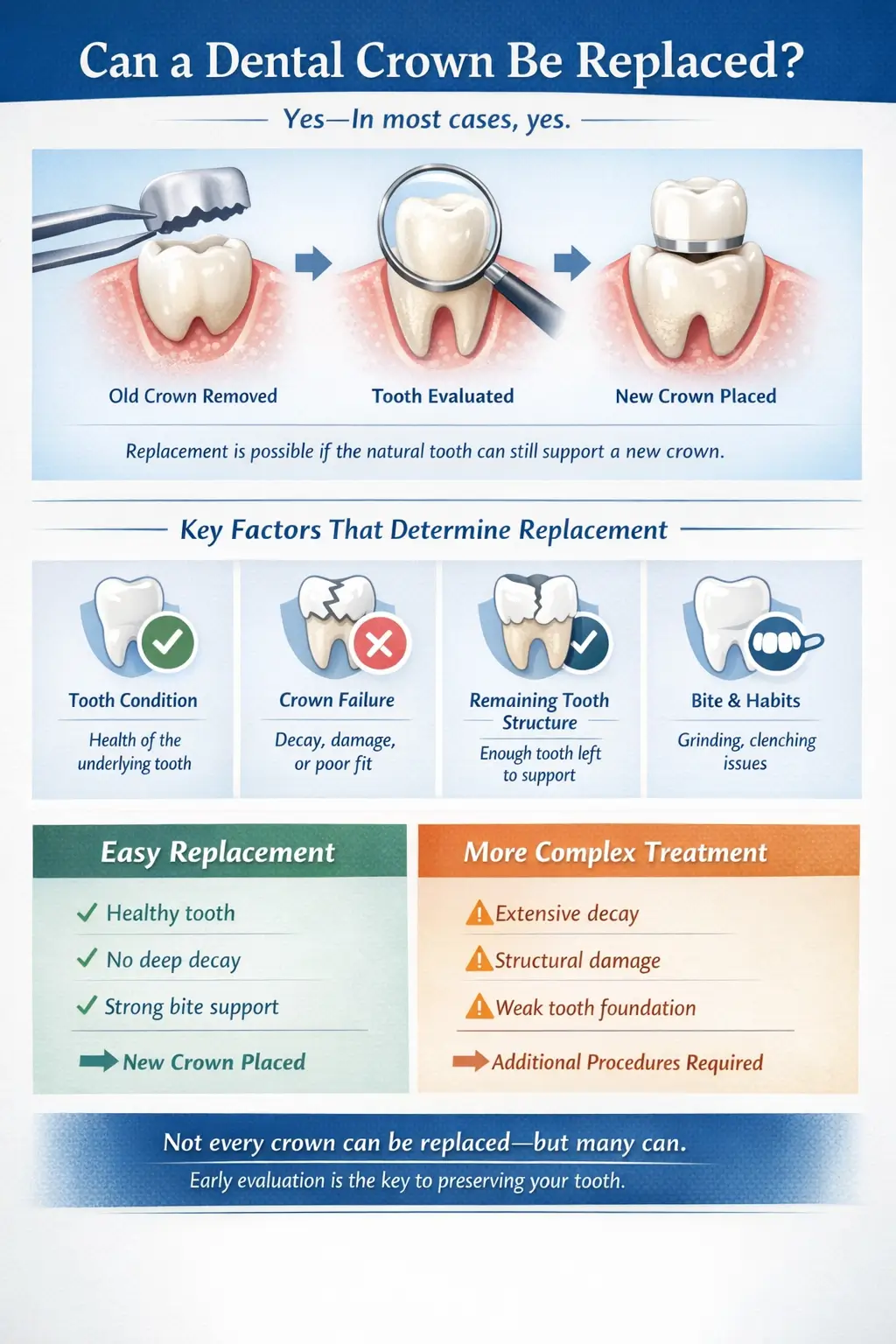
Replacing a crown is usually a straightforward clinical process:
- Crown Removal
The existing crown is carefully cut and removed without damaging the underlying tooth. - Tooth Evaluation
The dentist checks for decay, cracks, or structural weakness. - Tooth Preparation (if needed)
Additional shaping or buildup may be required to support the new crown. - Impression or Digital Scan
A precise mold or scan ensures proper fit and bite alignment. - Temporary Crown Placement
A temporary crown protects the tooth while the permanent one is fabricated. - Final Crown Placement
The new crown is bonded and adjusted for comfort and function.
How Often Do Dental Crowns Need to Be Replaced?
There is no fixed expiration date.
Some crowns last decades. Others need replacement sooner due to factors such as:
- Oral hygiene habits
- Grinding or clenching
- Diet and acidity exposure
- Quality of original placement
Routine dental exams are essential because problems under crowns often develop silently before pain appears.
Does Replacing a Crown Hurt?
Most patients report minimal discomfort.
Local anesthesia is used during crown removal and preparation. Post-procedure sensitivity is usually mild and temporary, especially when the tooth has already had a root canal.
| Situation | Repair | Replacement |
|---|---|---|
| Minor porcelain chip | Sometimes |
Rare |
| Loose crown (no decay) | Often |
Sometimes |
| Decay under crown | No |
Yes |
| Fractured crown | No |
Yes |
| Poor cosmetic match | No |
Yes |
A professional evaluation determines the safest option. Even a “simple” loose crown may hide decay or a crack underneath, so it’s best to confirm with an exam and X-rays before choosing repair vs replacement.
Cost to Replace a Dental Crown
The cost varies based on:
- Crown material
- Tooth location
- Additional procedures needed
While replacement may feel expensive, delaying treatment often leads to more complex—and costly—problems later.
Final Thoughts: Can a Crown Be Replaced Successfully?
Yes. In most cases, a dental crown can be replaced safely and predictably.
The key factors are early detection, proper diagnosis, and realistic treatment planning. Crowns fail quietly before they fail painfully. Regular dental visits allow problems to be addressed before tooth loss becomes the only option.
At Fortune Smiles Dental, crown replacement decisions are guided by biology, function, and long-term stability—not quick fixes. When replacement is recommended, it is because it protects the tooth—not because it’s routine.