
If you’re missing one or more teeth, you may be considering dental implants as a long-term solution. One of the most common questions patients ask is:
Do dental implants feel like natural teeth?
The short answer is yes—dental implants are designed to look, feel, and function very much like real teeth. In fact, many patients forget which tooth is the implant after healing is complete.
In this article, we’ll explain why dental implants feel so natural, how they compare to other tooth replacement options, what to expect during the adjustment period, and how to maximize long-term comfort.
Why “Natural Feel” Matters in Tooth Replacement
Replacing a missing tooth isn’t just about appearance. A good replacement should allow you to:
-
Chew comfortably
-
Speak clearly
-
Smile confidently
-
Avoid discomfort or movement
-
Maintain jawbone health
Some options restore appearance but fall short in function. Dental implants are different because they replace both the tooth and the root, which is essential for natural sensation and stability.
What Makes Dental Implants Feel Like Real Teeth?
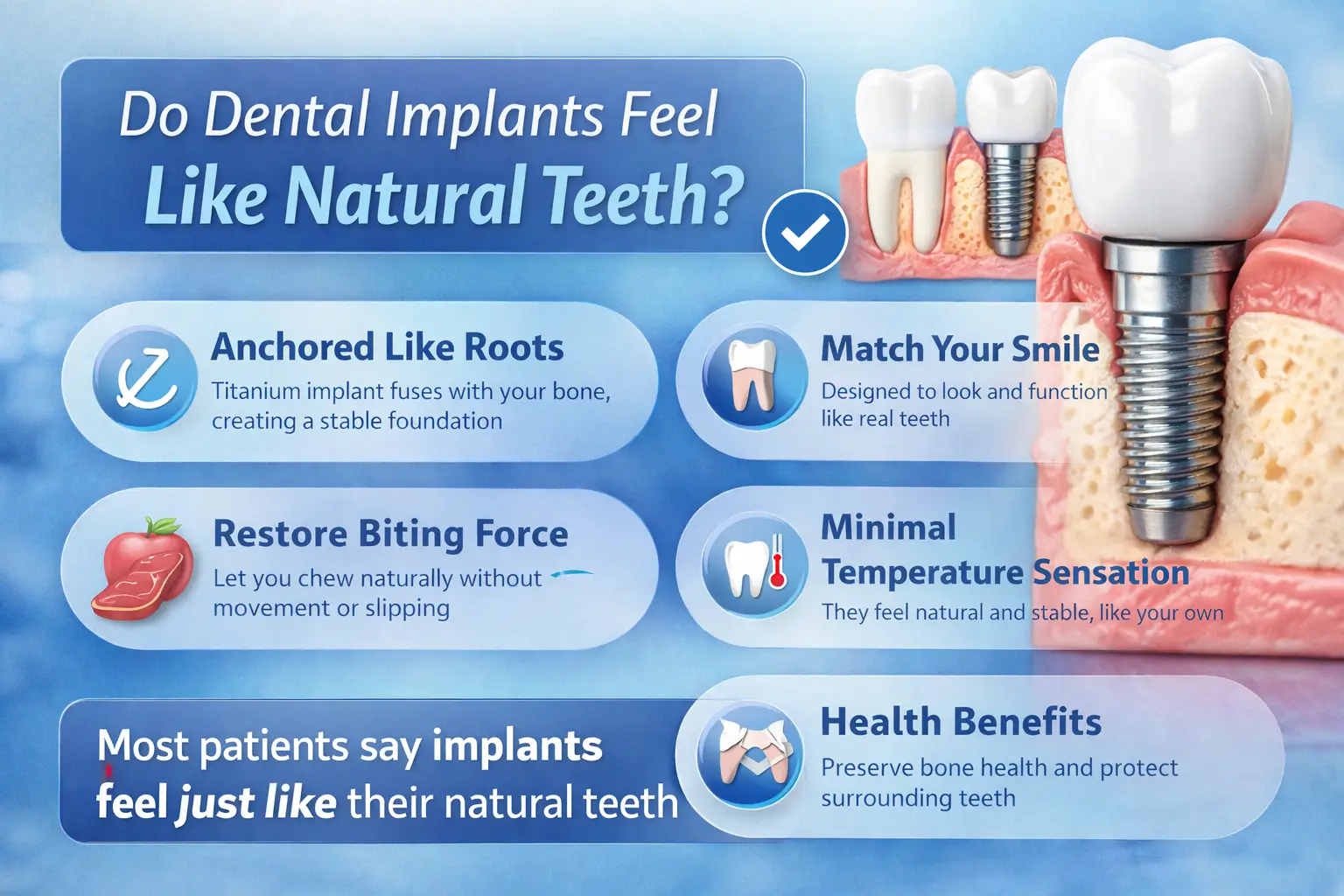
Dental implants consist of three main parts:
-
Titanium implant post (acts as the tooth root)
-
Abutment (connector)
-
Custom crown (visible tooth)
The key to their natural feel lies in a biological process called osseointegration.
Osseointegration Explained
After the implant is placed, your jawbone gradually grows around and bonds with the titanium post. This creates a stable, permanent foundation that mimics a natural tooth root.
Once this integration is complete:
-
The implant becomes part of your jaw
-
It does not shift or move
-
Chewing pressure feels stable and balanced
This direct connection to bone is what gives implants their realistic feel.
How Dental Implants Compare to Natural Teeth
Stability
Natural teeth are anchored by roots. Dental implants are anchored by a titanium post fused to bone. This makes implants:
-
Firm
-
Secure
-
Resistant to movement
Unlike dentures, implants do not slip.
Chewing Ability
Dental implants restore nearly 100% of natural biting force. This means you can comfortably eat:
-
Steak
-
Apples
-
Nuts
-
Crunchy vegetables
Many patients report they chew just as well—or even better—than before tooth loss.
Sensation
Dental implants do not contain nerves, so they don’t feel temperature the same way natural teeth do. However, surrounding gums, bone, and neighboring teeth provide normal sensory feedback, making the overall experience feel natural.
Most patients quickly adapt and no longer notice any difference.
Appearance
Implant crowns are custom-designed to match your natural teeth in:
-
Shape
-
Size
-
Color
-
Translucency
When properly crafted, even dentists may have difficulty telling which tooth is the implant.
Do Dental Implants Feel Different at First?
Yes, temporarily.
During the first few weeks after surgery, you may notice:
-
Mild soreness
-
Slight pressure
-
Awareness of the implant area
This is part of normal healing.
As healing progresses and osseointegration occurs, the implant begins to feel increasingly natural. Once fully healed, most patients say they cannot distinguish the implant from their natural teeth.
How Long Does It Take for Implants to Feel Normal?
The timeline varies, but typically:
-
Initial discomfort: a few days
-
Gum healing: 1–2 weeks
-
Bone integration: 3–6 months
After full healing, implants usually feel completely natural.
If you’d like to understand healing in more detail, you can explore our guide on how long a dental implant procedure takes and what to expect before, during, and after surgery.
Dental Implants vs Other Tooth Replacement Options
Dental Implants vs Dentures
Dentures sit on top of the gums and rely on suction or adhesive.
Common denture complaints:
-
Slipping
-
Clicking
-
Pressure points
-
Reduced chewing power
Implants, on the other hand, are fixed in the jawbone and feel much closer to real teeth.
Dental Implants vs Dental Bridges
Bridges rely on adjacent teeth for support. While they restore appearance, they do not replace the tooth root and do not prevent bone loss.
Implants are standalone replacements and preserve bone structure, contributing to a more natural long-term feel.
Can You Feel the Implant Inside Your Jaw?
No.
Once healed, you should not feel the implant post itself. It becomes integrated with bone and behaves like a natural root.
If an implant ever feels loose or uncomfortable, it is important to contact your dentist promptly.
Do Dental Implants Affect Speech?
After initial healing, implants should not affect speech at all.
In fact, many patients find their speech improves compared to missing teeth or loose dentures.
Any minor speech changes immediately after placement usually resolve within a few days.
Can You Feel Pressure When Chewing?
Yes—in a good way.
Pressure sensation is transmitted through surrounding tissues and neighboring teeth. This allows your brain to register biting force, helping you chew naturally and safely.
Implants distribute force evenly, reducing strain on nearby teeth.
What About Temperature Sensitivity?
Implants themselves do not feel hot or cold because they lack nerves. However, surrounding natural teeth and tissues provide enough feedback that most patients do not notice a difference.
If you experience unusual sensitivity, it may indicate gum irritation or another issue that should be evaluated.
Why Proper Planning Makes Implants Feel More Natural
Successful implants require careful planning and precise placement.
This includes:
-
Digital imaging
-
Evaluation of bone density
-
Proper angulation
-
High-quality materials
You can learn more about the full process on our Implant Dentistry Steps page, which explains each stage from consultation to final restoration.
How Long Do Dental Implants Last?
With good care, dental implants can last decades.
Longevity contributes to comfort—because nothing loosens, shifts, or wears out quickly.
Daily habits that protect your implants:
-
Brush twice daily
-
Floss daily
-
Attend regular dental cleanings
-
Avoid chewing ice or very hard objects
Are Dental Implants the Best Option for a Natural Feel?
For most patients, yes.
Dental implants are widely considered the gold standard for tooth replacement because they:
-
Look natural
-
Feel stable
-
Restore function
-
Preserve bone
-
Do not damage nearby teeth
For a full overview of implant solutions, visit our Implant Dentistry page.
Who Is a Good Candidate for Dental Implants?
Most healthy adults with adequate bone and good oral hygiene are candidates.
Even if bone loss is present, bone grafting may make implant treatment possible.
A consultation is the best way to determine your options.
Final Thoughts
Dental implants are designed to become part of your body. Through osseointegration and custom restoration, they provide a level of comfort and realism unmatched by other tooth replacement options.
For most patients, dental implants don’t just feel like natural teeth—they feel like their own teeth.