
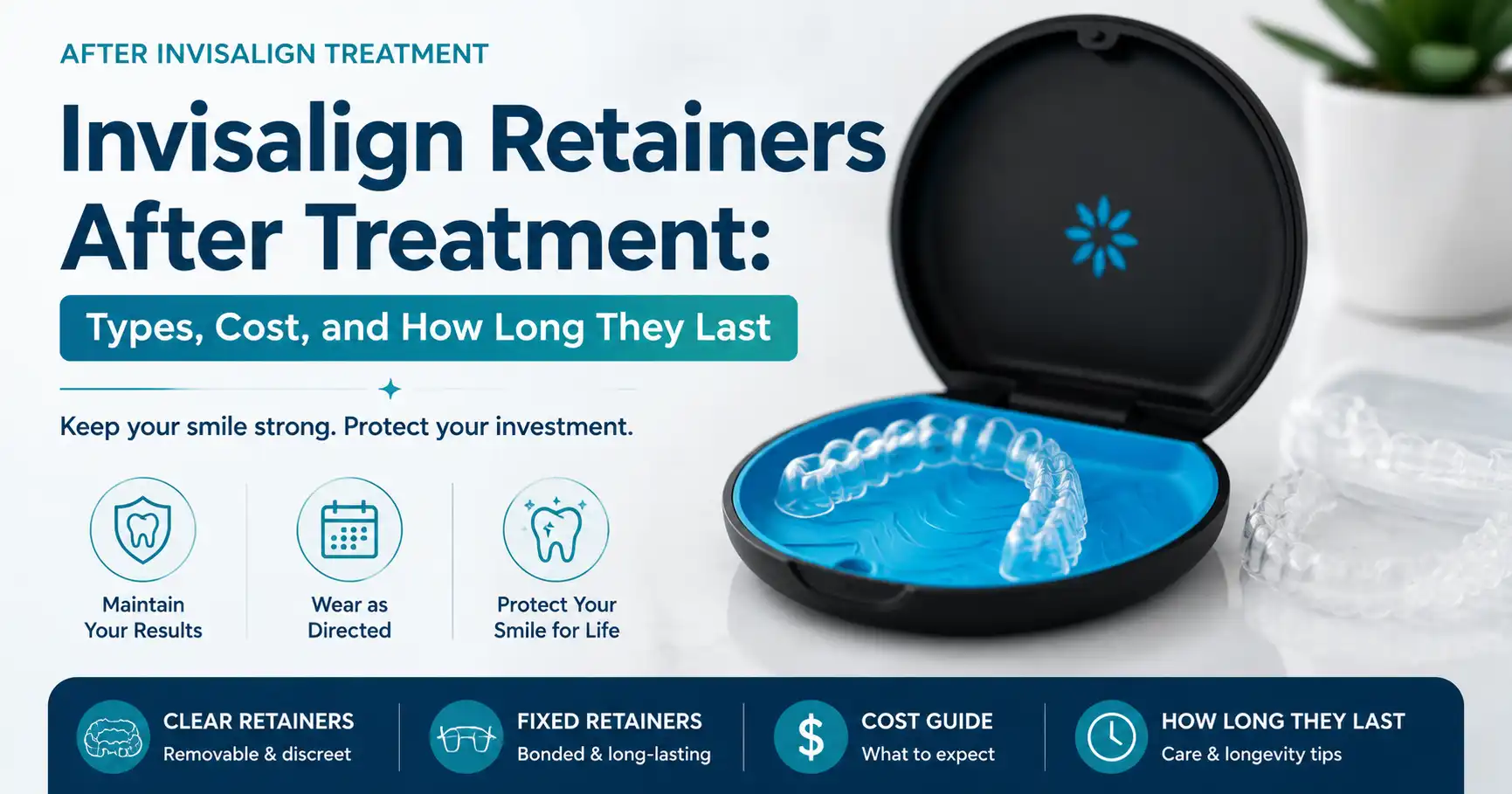
Finishing Invisalign treatment is a big milestone—but keeping your results stable is just as important as the treatment itself. Retainers are the key to maintaining your new smile long-term.
Quick Answer
Invisalign retainers are custom-made devices worn after orthodontic treatment to keep teeth in their new position. There are different types (clear, fixed, and hybrid), and most patients need to wear them long-term to prevent teeth from shifting back.
After completing Invisalign treatment, many patients assume the journey is over. In reality, the retention phase is what protects your investment. Without retainers, teeth naturally tend to shift back toward their original position—a process called relapse.
Patients across San Jose, including Blossom Valley, Alamitos, Robertsville, and areas near Westfield Oakridge, often ask how long retainers last and which type is best.
At Fortune Smiles Dental Care, Dr. Forutan provides personalized retention plans based on bite stability, tooth movement complexity, and long-term smile goals.
Why Retainers Are Essential After Invisalign
Even after perfectly aligned teeth, bone and gum tissues need time to stabilize around the new position. Without retention, natural forces from chewing, speaking, and muscle pressure can slowly move teeth back.
This is why orthodontists universally recommend retainers after Invisalign treatment.
Stability Phase
Bone and ligaments adapt to new tooth positions after treatment.
Relapse Prevention
Retainers prevent natural shifting back to original alignment.
Long-Term Protection
Maintains cosmetic and functional results for years or decades.
Types of Invisalign Retainers
There are several types of retainers used after Invisalign treatment. Each has advantages depending on patient needs, lifestyle, and bite complexity.
1. Clear Plastic Retainers (Essix Style)
These are the most common retainers after Invisalign. They look similar to aligners and are nearly invisible.
- Clear and discreet appearance
- Comfortable to wear
- Easy to remove for eating and cleaning
- Require daily wear
2. Fixed (Bonded) Retainers
A thin wire is bonded behind the teeth to prevent movement, usually on the lower front teeth.
- Permanent retention support
- No need to remember wearing it
- Invisible from the front
- Requires careful cleaning
3. Combination Retainers
Some patients benefit from both fixed and removable retainers for maximum stability.
How Long Do Invisalign Retainers Last?
Retainer lifespan depends on material, usage, and maintenance.
- Clear retainers: typically 1–3 years before replacement
- Fixed retainers: can last many years with proper care
- Combination systems: designed for long-term stability
Because clear retainers are plastic, they may wear down, crack, or become loose over time. Regular replacement ensures consistent protection.
What Happens If You Stop Wearing Retainers?
Stopping retainer use too early can lead to gradual tooth movement. In some cases, small shifts may occur within weeks or months.
Severe relapse may require additional orthodontic treatment, including Invisalign again or partial realignment.
How to Clean and Maintain Invisalign Retainers
Proper maintenance is essential to extend the lifespan of your retainers and keep your oral hygiene at a high level after Invisalign treatment.
Poorly maintained retainers can accumulate bacteria, odor, and discoloration over time.
- Rinse retainers with cool water daily
- Use a soft toothbrush (no toothpaste abrasives)
- Clean with retainer cleaning tablets weekly
- Avoid hot water (can warp plastic)
- Store in protective case when not in use
How Often Should You Wear Retainers?
Retention schedules vary depending on treatment complexity, but most patients follow a structured approach:
- First 3–6 months: full-time wear (except eating)
- After stabilization: night-only wear
- Long-term: several nights per week or lifelong maintenance
Teeth have a natural tendency to shift throughout life, which is why many orthodontists recommend long-term or even lifetime retention.
Retainer Maintenance Checklist
How Much Do Invisalign Retainers Cost?
The cost of retainers depends on type, replacement needs, and whether they are included in your Invisalign treatment plan.
On average:
- Clear retainers: moderate replacement cost per set
- Fixed retainers: higher initial placement, low maintenance cost
- Replacement frequency depends on wear and tear
Many patients consider retainers a long-term investment in protecting their Invisalign results and avoiding retreatment costs in the future.
Why Retainers Fail (Common Mistakes)
Even high-quality retainers can fail if not properly used or maintained.
- Not wearing them consistently
- Exposing them to heat
- Improper cleaning habits
- Ignoring cracks or wear
- Skipping replacements when needed
Why Patients in San Jose Choose Fortune Smiles Dental Care
At Fortune Smiles Dental Care, retention planning is not treated as an afterthought. It is an essential part of long-term orthodontic success.
Led by Dr. Forutan, the team focuses on personalized orthodontic care that ensures Invisalign results remain stable for years after treatment.
Patients from Blossom Valley, Alamitos, Robertsville, and near Westfield Oakridge trust the clinic for structured follow-up care, precise treatment planning, and long-term smile stability.
Protect Your Invisalign Results
Your smile transformation doesn’t end when braces or aligners come off. Retainers are what keep your teeth straight for life.
Frequently Asked Questions
Do I need to wear retainers forever after Invisalign?
Most patients need long-term or lifetime retention to prevent natural tooth shifting over time.
Can I stop wearing retainers after a few years?
Stopping retainer use can lead to gradual tooth movement. Most dentists recommend continued night wear.
What happens if I lose my retainer?
You should replace it as soon as possible to prevent teeth from shifting back.
Are clear retainers better than fixed retainers?
Both are effective. The best option depends on bite stability and patient lifestyle.
Where can I get Invisalign retainers in San Jose?
Fortune Smiles Dental Care provides Invisalign retention planning and follow-up care in San Jose and surrounding areas.