
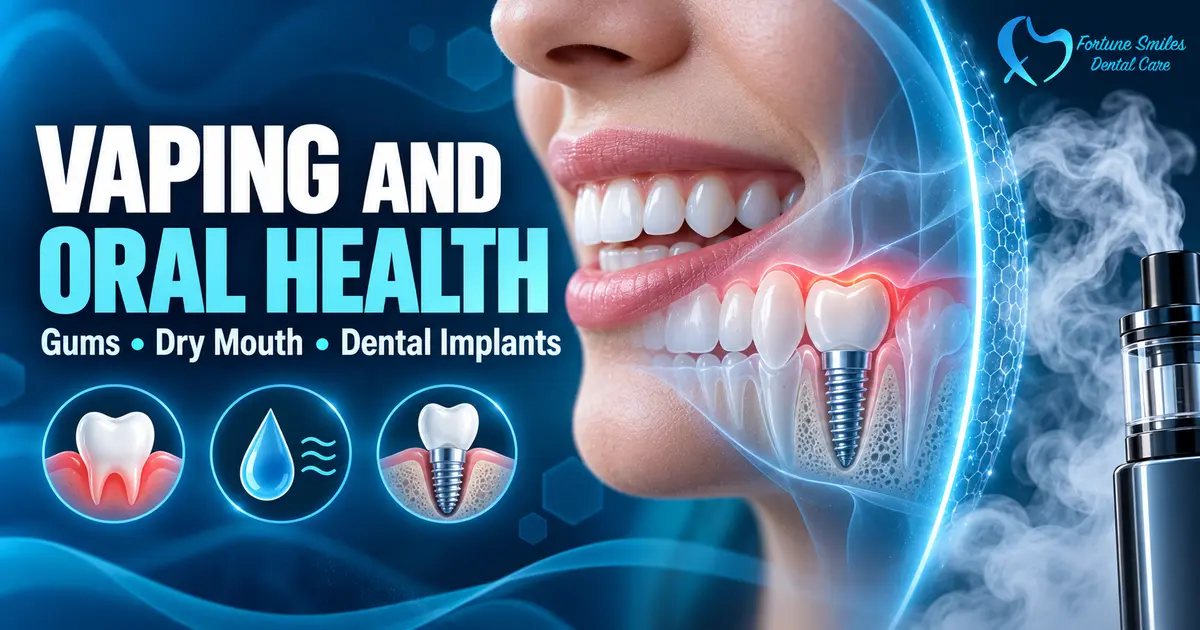
Vaping is sometimes described as producing harmless water vapor, but e-cigarettes actually create an aerosol that may contain nicotine, flavoring chemicals, ultrafine particles, volatile compounds, and metals. Because this aerosol passes directly over the teeth, gums, tongue, and other oral tissues, dentists are increasingly being asked how vaping may affect the mouth.
Research into vaping and oral health is still developing. Cigarettes have been studied for decades, while vaping devices, liquids, nicotine concentrations, and user habits continue to change. Existing studies do not prove that every person who vapes will develop dental disease, but they do raise concerns about dry mouth, tooth decay, gum inflammation, oral irritation, wound healing, and the tissues supporting dental implants.
This guide explains what researchers currently know, what remains uncertain, and what patients who vape can do to protect their teeth and gums.
Quick Answer: Is Vaping Bad for Your Teeth and Gums?
Vaping is not considered harmless to the mouth. E-cigarette aerosol may expose oral tissues to nicotine and other chemicals, while some users report dry mouth, irritation, altered taste, or mouth sores. Research also suggests possible associations with cavities, periodontal changes, and less favorable healing around natural teeth and dental implants.
- Vaping may contribute to dry mouth and changes in saliva.
- Reduced saliva can make the mouth more vulnerable to decay and bad breath.
- Nicotine may affect blood flow and the gum tissue’s healing response.
- Vapers may develop gum inflammation even when bleeding is not obvious.
- Vaping may interfere with healing after an extraction, periodontal procedure, or implant surgery.
- Long-term risks are not yet understood as clearly as the risks of cigarette smoking.
What Is Actually in E-Cigarette Aerosol?
E-cigarettes heat a liquid to create an aerosol that the user inhales and exhales. The liquid commonly contains propylene glycol, vegetable glycerin, flavorings, and nicotine, although product composition varies considerably.
The aerosol is not simply water. Depending on the device, liquid, coil, temperature, and usage pattern, it may contain nicotine, ultrafine particles, volatile organic compounds, flavoring chemicals, and metals such as nickel, tin, or lead.
These substances can contact the lips, cheeks, tongue, gums, teeth, fillings, crowns, and dental implants. Repeated exposure is one reason researchers are studying whether vaping changes the oral microbiome, saliva, inflammatory response, and healing process.
Products also differ widely. Findings from one device or liquid cannot necessarily be applied to every disposable vape, refillable device, nicotine concentration, or cannabis vaping product.
Possible Oral Effects of Vaping at a Glance
| Oral Concern | How Vaping May Contribute | Possible Warning Signs |
|---|---|---|
| Dry mouth | Aerosol ingredients, nicotine, dehydration, or changes in salivary function | Sticky mouth, thirst, cracked lips, difficulty swallowing dry food |
| Tooth decay | Reduced saliva, plaque changes, frequent sweet drinks, and inconsistent hygiene | Sensitivity, dark areas, white spots, food trapping, toothache |
| Gum inflammation | Possible changes in circulation, immune response, and oral bacteria | Tenderness, recession, swelling, bad breath, or bleeding |
| Oral irritation | Heat, concentrated flavorings, chemicals, or contact sensitivity | Burning, sores, peeling tissue, redness, or altered taste |
| Delayed healing | Nicotine exposure and possible effects on blood supply and tissue repair | Persistent pain, swelling, wound opening, or slow tissue closure |
| Implant complications | Inflammation, impaired healing, plaque accumulation, and possible bone changes | Bleeding, tenderness, gum recession, discharge, bone loss, or implant mobility |
Why Does Vaping Cause Dry Mouth?
Dry mouth, also called xerostomia, is one of the most frequently discussed oral complaints among people who vape. It can feel like persistent thirst, stickiness inside the mouth, thick saliva, cracked lips, or difficulty speaking and swallowing.
Propylene glycol and vegetable glycerin can attract and hold water. Frequent exposure may contribute to a sensation of oral dryness. Nicotine, mouth breathing, dehydration, medications, caffeine, cannabis, and medical conditions can also reduce saliva or make dryness more noticeable.
Saliva is not simply moisture. It helps wash away food, buffer acids, control microorganisms, lubricate oral tissues, and supply minerals that support enamel. When saliva is reduced, plaque and acids can remain against the teeth for longer periods.
Dry mouth associated with vaping should not automatically be blamed on the vape alone. A dental examination and medical history may identify medications, diabetes, autoimmune conditions, dehydration, or other contributing factors.
Signs Your Mouth May Be Too Dry
Can Vaping Increase the Risk of Cavities?
Some studies have found an association between vaping and untreated cavities or higher caries risk, but an association does not prove that vaping directly caused each cavity. Diet, fluoride exposure, previous smoking, oral hygiene, dental attendance, and socioeconomic factors may also influence the results.
Dry mouth is one possible link. When saliva cannot clear food and neutralize acids effectively, enamel spends more time in an environment that favors mineral loss. Changes in oral bacteria or plaque adhesion may also contribute.
Flavored aerosol may taste sweet, but sweetness does not necessarily mean the liquid contains ordinary dietary sugar. The cavity concern is more complex and may involve dryness, chemical exposure, bacterial changes, snacking habits, and frequent consumption of sugary or acidic drinks while vaping.
A person who vapes and repeatedly develops cavities should receive an individualized risk assessment. The dentist may recommend prescription-strength fluoride, professional fluoride treatments, changes in home care, or more frequent preventive visits.
How Vaping May Affect Your Gums
Healthy gums form a protective seal around the teeth. Gingivitis develops when plaque causes inflammation at the gumline. If inflammation progresses and damages the supporting attachment and bone, the condition becomes periodontitis.
Studies examining vaping and periodontal health have produced mixed results. Some report greater inflammation, plaque, probing depths, or other unfavorable markers among e-cigarette users. Others find smaller differences after accounting for cigarette smoking and other factors.
Nicotine may narrow blood vessels and influence circulation in the gum tissue. This matters because redness and bleeding are common warning signs of gingivitis. Reduced bleeding does not necessarily prove the gums are healthy, especially in a person regularly exposed to nicotine.
Watch for persistent bad breath, gum recession, tenderness, swelling, new spaces between teeth, loose teeth, or changes in your bite. A periodontal examination can detect inflammation and attachment loss that may not be obvious at home.
Does Vaping Affect Oral Bacteria?
The mouth contains a complex community of bacteria, fungi, and other microorganisms. Many are harmless or beneficial, while others can contribute to cavities and gum disease when the oral environment changes.
Laboratory and clinical research suggests e-cigarette exposure may alter this oral ecosystem. Possible changes include differences in bacterial composition, plaque behavior, inflammatory signaling, and the ability of certain microorganisms to attach to oral surfaces.
However, these findings should be interpreted carefully. Device types and liquids vary, and many study participants previously smoked cigarettes or use both cigarettes and vapes. Those factors make it difficult to separate the effect of vaping from earlier or continuing tobacco exposure.
The practical response remains the same: remove plaque thoroughly, maintain saliva flow, limit frequent sugar exposure, and attend professional examinations so early changes can be identified.
Vaping and Mouth Sores, Irritation, and Burns
Some vape users report oral burning, throat irritation, dry or cracked lips, altered taste, ulcers, or areas of peeling tissue. These symptoms may be related to heat, flavoring agents, nicotine concentration, allergic or irritant reactions, or another unrelated oral condition.
Mechanical problems with vaping devices can also cause injury. A hot mouthpiece, leaking liquid, or battery malfunction may burn the lips or oral tissues. A device-related burn should be assessed promptly, particularly if there is blistering, significant pain, swelling, or difficulty swallowing.
Any ulcer, red patch, white patch, lump, or unexplained sore that persists for approximately two weeks should be professionally evaluated. Do not assume that a persistent lesion is only irritation from vaping.
Does Vaping Cause Oral Cancer?
There is currently not enough long-term human evidence to calculate the oral cancer risk from vaping in the same way researchers can for cigarette smoking. Vaping products have also changed rapidly, and many users have not been followed for the decades needed to measure cancer outcomes reliably.
This uncertainty should not be interpreted as proof of safety. E-cigarette aerosol can contain potentially harmful chemicals, and researchers have observed cellular and molecular changes that require further study.
The safest approach is to avoid vaping, attend routine oral cancer screenings, and have any persistent sore, lump, color change, numbness, or swallowing problem examined.
Can Vaping Delay Healing After Dental Treatment?
Healing after an extraction, gum procedure, bone graft, or implant surgery depends on blood supply, oxygen delivery, immune response, tissue repair, and protection of the surgical site. Nicotine exposure can affect several of these processes.
Preliminary clinical research and broader surgical reviews suggest vaping may interfere with wound healing. Researchers have therefore cautioned against treating vaping as safe during oral surgical recovery, even though its exact risk compared with cigarette smoking has not been established for every procedure.
Inhaling may also create pressure changes in the mouth, while heat and aerosol can irritate healing tissue. After an extraction, disturbing the blood clot can contribute to complications such as dry socket.
Tell your dentist or oral surgeon what you vape, whether it contains nicotine or cannabis, how frequently you use it, and whether you also smoke. Follow the specific preoperative and postoperative instructions you receive rather than choosing your own cessation interval.
Vaping and Dental Implants
A dental implant must become stable within the jawbone through a biological healing process called osseointegration. The surrounding gum tissue must also create a healthy seal that can be maintained with daily cleaning and professional care.
Systematic reviews have raised concerns about vaping and peri-implant health. Reported findings include unfavorable changes in inflammatory markers, gum conditions, or bone levels around implants. However, the number and quality of available studies remain limited, and some studies include only male participants or people with a previous history of smoking.
Vaping should therefore be considered a relevant risk factor during implant planning rather than ignored because it does not involve traditional smoke. It does not automatically mean that an implant will fail, but your dentist needs accurate information to evaluate your risks and plan follow-up care.
If you are preparing for implant treatment, read our guide to dental implant healing time for a detailed explanation of soft-tissue healing and osseointegration.
Signs of a Problem Around a Dental Implant
Dental implants cannot develop cavities, but the gum and bone around them can become inflamed or infected. Contact your dentist if you notice:
- Bleeding or discharge around the implant
- Swollen, red, or tender gum tissue
- Gum recession or visible implant components
- Persistent bad taste or bad breath
- Pain when biting or chewing
- A restoration that feels loose
- Any movement of the implant itself
Early peri-implant inflammation may be manageable when identified promptly. Waiting until an implant becomes painful or mobile can allow more extensive tissue or bone damage to develop.
Is Vaping Safer for Your Mouth Than Smoking?
Cigarette smoke exposes the body to combustion products and a large number of toxic chemicals. For an adult who already smokes cigarettes, switching completely to an authorized e-cigarette product may reduce exposure to some harmful chemicals. That does not make vaping harmless or healthy.
From a dental perspective, both smoking and vaping may expose the gums to nicotine and other substances that can affect inflammation, healing, and oral tissues. Cigarette smoking has a much larger and longer-established evidence base connecting it to periodontal disease, tooth loss, delayed healing, and implant complications.
Using cigarettes and e-cigarettes together may preserve many of the risks of smoking while adding continued vaping exposure. A patient should not hide dual use from the dental team.
People who have never smoked should not begin vaping under the assumption that it is risk-free. Those trying to stop smoking or vaping should discuss evidence-based options with a qualified healthcare professional.
How Vape Users Can Protect Their Oral Health
Stay Hydrated
Drink plain water regularly. Water may relieve dryness, but persistent xerostomia still needs evaluation.
Use Fluoride Toothpaste
Brush twice daily for two minutes. Fluoride helps strengthen enamel against acid-related mineral loss.
Clean Between Teeth
Use floss, an interdental brush, or a water flosser once daily according to your dental needs.
Avoid Frequent Sugar
Repeated sugary drinks and snacks increase acid attacks, particularly when saliva is reduced.
Do Not Ignore Changes
Report sores, gum recession, sensitivity, bleeding, or persistent dryness before the problem progresses.
Attend Regular Visits
Professional examinations can detect cavities, periodontal pockets, tissue changes, and implant inflammation early.
What Helps With Vape-Related Dry Mouth?
The first step is identifying all possible causes. In addition to vaping, dry mouth may be related to medication, mouth breathing, dehydration, anxiety, diabetes, autoimmune disease, or another medical condition.
- Sip plain water throughout the day.
- Use sugar-free gum or lozenges if they are appropriate for you.
- Limit frequent alcohol, caffeine, and sugary or acidic beverages.
- Avoid alcohol-containing mouthwash if it worsens dryness.
- Use a humidifier if nighttime dryness is a problem.
- Continue fluoride toothpaste and daily interdental cleaning.
- Ask your dentist about saliva substitutes or additional fluoride protection.
Do not continually suck on sugary candy to relieve dryness. Although it may temporarily stimulate saliva, repeated sugar exposure can increase cavity risk.
Should You Tell Your Dentist That You Vape?
Yes. Vaping is relevant to dental treatment planning, just like medications, medical conditions, cigarette use, cannabis use, and alcohol consumption.
Your dentist is not asking to judge you. Knowing what substances you use helps the dental team assess dry mouth, gum health, cavity risk, anesthesia considerations, surgical healing, and implant maintenance.
Be specific about whether the product contains nicotine, cannabis, or another substance. Also mention how frequently you vape, whether you previously smoked, and whether you currently use both cigarettes and e-cigarettes.
Fortune Smiles Dental Care offers examinations, professional cleanings, periodontal assessments, and individualized preventive guidance through our general dentistry services.
When to Schedule a Dental Examination
Arrange an appointment if you vape and experience any of the following:
- Persistent dry mouth or difficulty swallowing
- Frequent cavities or new tooth sensitivity
- Bleeding, swollen, receding, or tender gums
- Bad breath that continues despite brushing
- A sore, lump, white patch, or red patch lasting about two weeks
- Slow healing after an extraction or dental procedure
- Pain, bleeding, recession, or movement around an implant
- Any burn or significant injury caused by a vaping device
What If You Want to Stop Vaping?
Nicotine dependence can make quitting difficult, especially with devices that deliver high nicotine concentrations and can be used repeatedly throughout the day.
The U.S. Food and Drug Administration has not approved e-cigarettes as smoking-cessation medications. Adults trying to stop smoking or vaping can ask a physician or other qualified healthcare professional about counseling, nicotine-replacement products, prescription options, and structured support.
Do not replace vaping with cigarettes, smokeless tobacco, or unregulated nicotine products. If you currently smoke cigarettes, discuss the safest cessation strategy with a healthcare professional rather than attempting unsupported dual use.
Your dentist can document oral changes, explain how nicotine may affect treatment, and support your health goals, but medical cessation treatment should be coordinated with an appropriate healthcare provider.
Concerned About How Vaping Is Affecting Your Mouth?
Fortune Smiles Dental Care can evaluate your teeth, gums, saliva, oral tissues, and dental implants, then recommend a personalized preventive or treatment plan.
Frequently Asked Questions
Can a dentist tell if you vape?
A dentist may notice dry mouth, irritation, gum changes, plaque, decay, or delayed healing, but these findings can have many causes. An examination cannot always prove that a person vapes. Honest disclosure allows more accurate treatment planning.
Does vaping make your gums recede?
Gum recession has several causes, including periodontal disease, aggressive brushing, thin gum tissue, tooth position, and tobacco or nicotine exposure. Vaping may be a contributing risk factor, but a dental examination is needed to identify the cause.
Can vaping cause cavities?
Studies have found associations between vaping and tooth decay, but more research is needed to prove direct causation. Dry mouth, altered plaque conditions, diet, fluoride exposure, and oral hygiene may all influence cavity risk.
Can you vape after a tooth extraction?
Vaping may irritate the wound, expose it to nicotine and chemicals, and disturb early healing. Follow the specific instructions provided by your dentist or oral surgeon and do not resume vaping simply because discomfort has improved.
Can you get dental implants if you vape?
Vaping does not automatically disqualify every patient from implant treatment, but it may increase concerns about healing and peri-implant health. Your dentist must evaluate your gums, bone, medical history, nicotine exposure, hygiene, and willingness to follow preoperative and postoperative instructions.
Is nicotine-free vaping safe for teeth?
Removing nicotine may eliminate some nicotine-related concerns, but the aerosol can still contain flavorings, solvents, particles, and other substances. Nicotine-free vaping should not be described as risk-free for the mouth.
Will dry mouth improve if you stop vaping?
Dryness related to vaping may improve after exposure stops, but recovery varies and another cause may also be present. Persistent dry mouth should be evaluated because it can increase the risk of cavities, irritation, and oral infection.