
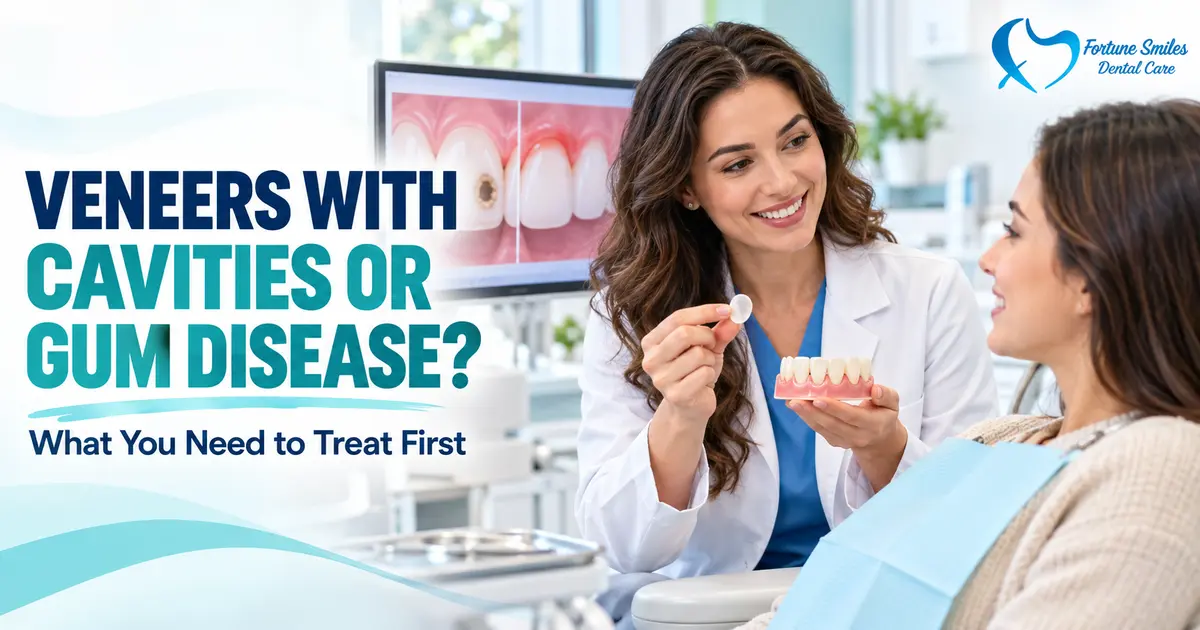
Veneers can improve the color, shape, size, and symmetry of visible teeth, but they cannot treat active dental disease. Before placing veneers, a dentist must confirm that the teeth are healthy enough to support the restorations and that the surrounding gums are stable.
If you are wondering can you get veneers with cavities, the short answer is usually not until the decay has been treated. The same rule applies to active gum disease. Covering a cosmetic concern without treating the underlying condition can allow the disease to progress and may compromise the fit, appearance, or longevity of the veneers.
Having cavities or gum disease does not necessarily mean you can never receive veneers. Many patients become suitable candidates after completing restorative or periodontal treatment. The final decision depends on the amount of healthy tooth structure remaining, the stability of the gums and supporting bone, and whether veneers are the most conservative option. For a general overview, read our guide to dental veneers.
Quick Answer
Teeth should be free of untreated decay and active periodontal disease before veneers are placed. Depending on the findings, your dentist may recommend a filling, root canal treatment, professional cleaning, periodontal therapy, or another procedure before beginning cosmetic treatment.
- Small cavities may be restored before veneer preparation.
- Extensive decay may make a crown or onlay more appropriate.
- Gingivitis should be controlled before treatment.
- Periodontitis must be treated and stabilized.
- Gum recession may affect veneer design and margin placement.
- A complete dental examination is necessary to determine candidacy.
Why Oral Health Matters Before Veneers
A veneer is a thin restoration bonded mainly to the front surface of a tooth. It can conceal discoloration, minor chips, uneven edges, and certain shape concerns. However, it does not remove decay from inside the tooth or treat infection and inflammation around the gums.
Predictable veneer treatment requires a stable foundation. The dentist needs sufficient healthy tooth structure for bonding, gums that can heal around the restoration, and a bite that will not place excessive pressure on the veneers.
Untreated dental problems may interfere with several parts of treatment:
- Bonding: weakened tooth structure may reduce the reliability of the veneer bond.
- Accuracy: swollen or bleeding gums can interfere with scans, impressions, and margin placement.
- Appearance: gum inflammation or recession can create uneven gumlines or exposed veneer edges.
- Comfort: untreated decay may continue causing sensitivity or pain.
- Longevity: future dental treatment may require removing or replacing the veneer.
Can Veneers Be Placed Over Cavities?
A dentist should not simply cover an active cavity with a veneer. Tooth decay damages enamel and dentin. Placing a cosmetic shell over the front of the tooth does not reliably remove the bacteria or weakened tissue underneath.
If the decay continues, the tooth may develop sensitivity, pain, infection, or additional structural damage. The veneer could then need to be removed so the dentist can access and restore the tooth. Advanced decay may eventually require root canal treatment or a more protective restoration.
Small cavities do not always cause pain. That is why a pre-veneer assessment may include a visual examination and dental X-rays when clinically appropriate. Learn more about the early signs of tooth decay and why decay can exist without obvious symptoms.
Once the cavity has been treated, the dentist can assess the remaining enamel and overall strength of the tooth. Some teeth may still be suitable for veneers, while others may need a filling, onlay, or crown.
How the Size of a Cavity Affects Veneer Eligibility
| Dental Finding | Possible Treatment | Effect on Veneer Candidacy |
|---|---|---|
| Small cavity away from the veneer margin | Remove the decay and place a conservative filling. | The tooth may remain suitable after treatment. |
| Decay on the front surface | Remove the decay and assess the remaining enamel. | Candidacy depends on the available bonding surface. |
| Cavity between teeth | Restore the affected area and evaluate the contact point. | The veneer design may need to be modified. |
| Large cavity or weakened tooth | Rebuild and protect the tooth with an appropriate restoration. | A crown or onlay may provide better protection. |
| Decay reaching the dental pulp | Root canal treatment may be required. | The final restoration depends on the remaining tooth structure. |
These are general possibilities rather than fixed rules. Cavity location, previous dental work, enamel thickness, bite forces, and the amount of remaining tooth structure all influence the final recommendation.
Can Veneers Hide Tooth Decay?
Veneers may conceal certain types of discoloration, but they should not be used to hide active decay. Brown, black, white, or chalky areas can have several causes, and appearance alone cannot confirm whether a tooth is healthy.
The dentist must determine whether the color change comes from decay, staining, enamel development, trauma, an old filling, or another condition. Cosmetic treatment should begin only after the cause has been identified.
Can You Get Veneers With Gum Disease?
Veneers should usually be postponed while gum disease is active. Healthy gum tissue creates a natural transition between the veneer and the tooth. Inflamed gums may bleed during preparation or scanning, making it difficult to create accurate margins.
Gum disease includes different stages. Gingivitis causes gum inflammation without the bone loss associated with periodontitis. Periodontitis is more advanced and can damage the tissues and bone supporting the teeth.
A history of periodontal disease does not automatically disqualify a patient. Veneers may become possible after treatment if the disease is stable, the teeth have sufficient support, and the patient can maintain effective oral hygiene. Our guide to gum disease prevention explains how patients can protect their gums.
If periodontal disease has caused significant bone loss, loose teeth, or severe recession, protecting the stability of the teeth takes priority over cosmetic treatment.
Why Bleeding or Swollen Gums Affect Veneer Treatment
Veneer margins are often positioned close to the gumline. The dental team needs clear access to this area to prepare the tooth conservatively, record an accurate impression or digital scan, and bond the final restoration.
Bleeding and fluid can interfere with visibility and moisture control. Swollen gums may also hide the stable position and shape of the gumline.
If veneers are designed while the gums are inflamed, their edges may appear incorrectly positioned after the swelling resolves. Treating the gums first gives the dentist a healthier and more predictable reference for smile design.
Gingivitis vs. Periodontitis Before Veneers
| Condition | Common Findings | Priority Before Veneers |
|---|---|---|
| Healthy gums | Firm tissue without persistent redness, swelling, or bleeding | Proceed with a complete cosmetic evaluation |
| Gingivitis | Redness, swelling, tenderness, or bleeding without bone loss | Professional cleaning and improved home care |
| Periodontitis | Periodontal pockets, attachment loss, bone loss, or recession | Periodontal treatment and confirmation of stability |
| Advanced periodontal damage | Significant bone loss, loose teeth, or extensive recession | Protect tooth stability and reconsider cosmetic options |
What If Your Gums Have Receded?
Gum recession exposes part of the tooth root and can make the teeth appear longer. It may result from periodontal disease, aggressive brushing, thin gum tissue, smoking, tooth position, or other factors.
Recession matters because veneers primarily cover the visible crowns of teeth. If the gumline continues moving after treatment, the edge of a veneer or the darker root surface may become visible. This can affect appearance and increase sensitivity.
A dentist may recommend monitoring the gumline, improving brushing technique, treating inflammation, repositioning a tooth, or consulting a periodontist. Selected patients may benefit from gum grafting or another periodontal procedure before cosmetic treatment.
Mild and stable recession does not always prevent veneers. The cause, tissue thickness, root exposure, and likelihood of future recession must be evaluated.
What Treatment May Be Needed First?
Professional Cleaning
A dental cleaning may help when gum inflammation is associated with plaque and tartar around otherwise healthy teeth.
Cavity Treatment
The dentist removes decay and restores the tooth before confirming the final veneer plan.
Periodontal Therapy
Periodontitis may require deep cleaning, periodontal maintenance, or treatment by a periodontist.
Root Canal Treatment
A tooth with deep decay or infected dental pulp may need treatment before receiving its final restoration.
Gumline Treatment
Gum contouring, grafting, or crown lengthening may occasionally form part of smile planning.
Bite Management
Grinding, clenching, or an unstable bite may need treatment to reduce excessive pressure on veneers.
Treating oral disease first is not an unnecessary delay. It protects the natural teeth and helps establish a more stable foundation for cosmetic treatment.
How Long After a Filling Can You Get Veneers?
There is no universal waiting period. If a small cavity is treated successfully and the tooth remains comfortable and structurally suitable, veneer planning may continue without a lengthy delay.
A tooth that required deep decay removal, root canal treatment, or extensive rebuilding may need further evaluation. The dentist must confirm that symptoms have resolved and that the remaining structure can support the proposed restoration.
The size and position of the filling also matter. A large front filling may reduce the amount of natural enamel available for bonding and change the type of restoration the dentist recommends.
How Long After Gum Treatment Can You Get Veneers?
Veneer treatment may be considered after the gums have responded to therapy and the dentist is satisfied that the tissue is stable. The required healing and monitoring period depends on the original diagnosis and the treatment performed.
Mild gingivitis may improve relatively quickly after professional cleaning and consistent home care. Periodontitis usually requires more extensive treatment and reassessment. Gum grafting or tissue-contouring procedures may require additional healing before final veneer margins can be selected.
Instead of following a fixed number of days, the dentist evaluates inflammation, bleeding, plaque control, periodontal measurements, and the stability of the gumline.
Signs Veneer Treatment Should Be Postponed
- Untreated cavities or active tooth decay
- Persistent toothache or sensitivity
- Swollen, tender, or frequently bleeding gums
- Active periodontal pockets or continuing bone loss
- Loose teeth or unexplained bite changes
- Dental abscess or active infection
- Insufficient healthy tooth structure
- Uncontrolled grinding or clenching
Could You Need a Crown Instead?
A veneer covers mainly the front surface of a tooth and works best when the underlying tooth remains reasonably healthy. A crown surrounds more of the visible tooth and can provide greater structural coverage.
If decay, a fracture, a large filling, or previous treatment has significantly weakened the tooth, a veneer may not provide enough protection. A crown or onlay may then be more appropriate.
Crowns are not automatically better than veneers and generally require more tooth preparation. The correct restoration should preserve healthy structure while providing the strength the tooth needs.
Do Existing Fillings Prevent Veneers?
A small and stable filling does not automatically prevent veneer treatment. The dentist will assess its size, position, age, condition, and relationship to the proposed veneer margin.
Bonding is generally more predictable when sufficient enamel remains. A tooth with a large front filling or extensive enamel loss may require a different veneer design or another type of restoration.
Old fillings with leakage, cracks, or recurrent decay need treatment before cosmetic work begins.
Can You Get Minimal-Prep Veneers With Dental Disease?
Minimal-prep and no-prep veneers do not eliminate the need for healthy teeth and gums. Although they may require less enamel reduction in selected cases, they still depend on a clean and stable bonding surface.
Decay must still be removed, and active gum disease must still be treated. Adding material to inflamed gums or already prominent teeth may create a bulky result that is difficult to clean.
Patients interested in preserving enamel can learn more about minimal-prep veneers in San Jose and the factors that determine candidacy.
Veneers vs. Other Treatment Options
| Treatment | May Be Used For | Important Limitation |
|---|---|---|
| Composite filling | Repairing a cavity with limited damage | May not create a complete cosmetic transformation |
| Cosmetic bonding | Small chips, gaps, or localized shape changes | Can stain or wear sooner than porcelain |
| Porcelain veneer | Changing the front appearance of a healthy, suitable tooth | Cannot treat active decay or gum disease |
| Onlay | Restoring a damaged chewing surface while preserving tooth structure | Not primarily intended for full smile redesign |
| Dental crown | Protecting teeth weakened by extensive decay or fractures | Usually requires more preparation than a veneer |
For smaller cosmetic concerns, compare teeth bonding vs. veneers to understand differences in preparation, durability, repairability, and cosmetic coverage.
What Happens During a Pre-Veneer Examination?
A responsible veneer consultation involves more than choosing a tooth shade. The dentist must determine whether cosmetic treatment can be completed without overlooking disease or weakening the teeth.
- Reviewing your dental and medical history
- Checking for cavities, cracks, and defective fillings
- Examining gum health and recession
- Assessing tooth mobility and supporting bone
- Taking dental X-rays when necessary
- Evaluating enamel thickness and previous dental work
- Examining your bite and signs of grinding
- Discussing bonding, orthodontics, crowns, and other alternatives
Routine care can identify problems before they complicate cosmetic treatment. Learn why regular dental checkups remain essential before and after veneers.
Protecting Your Teeth and Gums After Veneers
Porcelain veneers cannot develop cavities, but the natural teeth beneath and around their margins still can. Gum disease can also develop around veneered teeth.
- Brush twice daily with fluoride toothpaste.
- Clean between the teeth every day.
- Attend professional cleanings and examinations.
- Limit frequent exposure to sugary or acidic products.
- Avoid biting hard objects with veneered teeth.
- Use a nightguard if your dentist recommends one.
- Report bleeding, sensitivity, looseness, or gumline changes promptly.
Good home care protects both the cosmetic restoration and the natural structures supporting it.
Concerned About Cavities or Gum Health Before Veneers?
Fortune Smiles Dental Care can evaluate your teeth and gums, treat underlying concerns, and determine whether veneers or another restoration is the safest option for your smile.
Frequently Asked Questions
Can a dentist put veneers over tooth decay?
Active decay should be removed and treated before veneer placement. Covering decay does not stop the disease and may allow the tooth to become more damaged or infected.
Can you get veneers after having cavities filled?
Possibly. The dentist will evaluate the filling’s size and location, the amount of healthy enamel remaining, and the strength of the tooth. Large fillings may make another restoration more suitable.
Can cavities form under veneers?
The veneer itself cannot decay, but the natural tooth can develop a cavity near the veneer margin or on another surface. Daily hygiene and regular dental examinations remain necessary.
Can you get veneers if your gums bleed?
Persistent bleeding may indicate gum inflammation or periodontal disease. The cause should be diagnosed and treated before veneers so treatment can be planned around a healthy, stable gumline.
Can veneers fix receding gums?
Veneers may alter the visible shape of teeth, but they do not treat the cause of gum recession or replace lost gum tissue. Periodontal treatment may be required first.
Can someone with periodontal disease ever get veneers?
Some patients become candidates after periodontal treatment if the disease is stable, the teeth have sufficient support, and oral hygiene can be maintained. Advanced bone loss or tooth mobility may make veneers unsuitable.
Will veneers cure tooth sensitivity?
Not necessarily. Sensitivity may result from decay, cracks, gum recession, enamel wear, grinding, or other conditions. The cause should be diagnosed before deciding whether veneers are appropriate.
Disclaimer: This article provides general educational information and is not a substitute for a dental examination, diagnosis, or personalized treatment plan. Veneer eligibility and preliminary treatment vary between patients.