
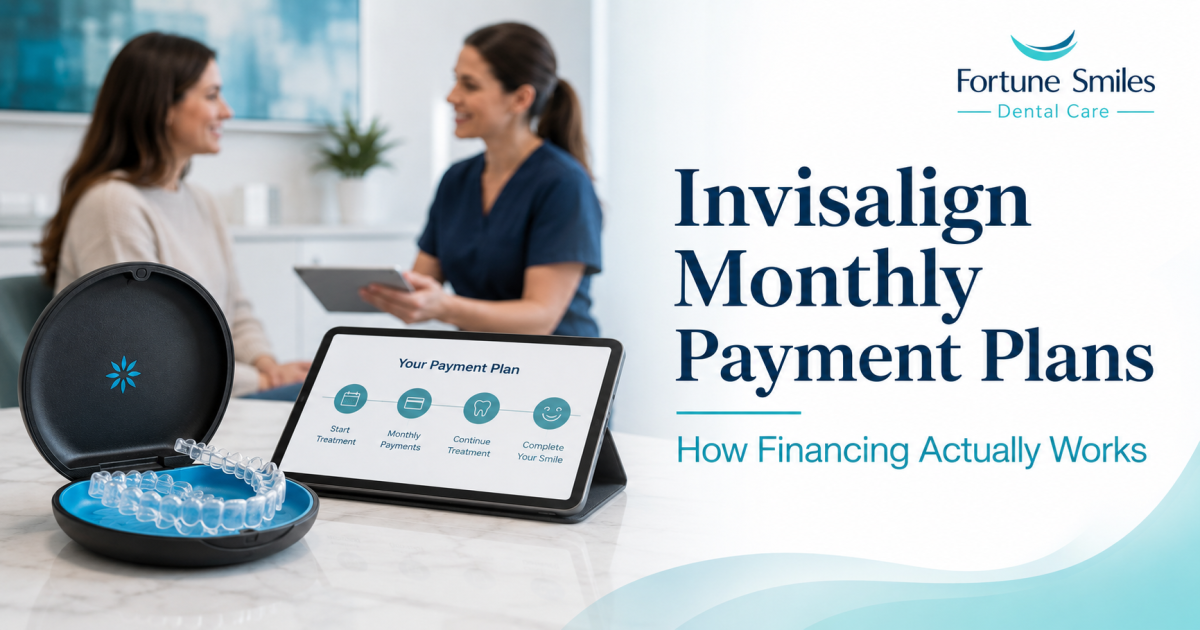
Invisalign can be a life-changing investment for patients who want straighter teeth without traditional metal braces. But for many people, the first question is not whether clear aligners are convenient. It is whether the treatment can fit into a monthly budget.
That is where Invisalign monthly payment plans come in. Instead of paying the full treatment fee upfront, many patients use financing, insurance benefits, HSA or FSA funds, or staged payment options to make treatment more manageable.
This guide explains how Invisalign financing actually works, what affects your monthly payment, what questions to ask before signing a plan, and how to compare affordability without choosing treatment based only on the lowest advertised number.
Quick Answer: Can Invisalign Be Paid Monthly?
Yes. Many dental offices offer monthly payment options for Invisalign through third-party financing companies, in-office payment arrangements, or a combination of insurance and patient payments. The exact monthly amount depends on your total treatment cost, down payment, insurance coverage, credit approval, interest rate, and repayment term.
- Typical payment structure: down payment plus monthly installments
- Common financing terms: short-term promotional plans or longer monthly plans
- Cost factors: case complexity, treatment length, refinements, retainers, and local fees
- Insurance: may reduce the patient portion if orthodontic benefits apply
- Best next step: request a written estimate before choosing a payment plan
How Much Does Invisalign Usually Cost?
Invisalign cost varies because clear aligner treatment is customized. A mild spacing case that requires a short series of aligners may cost less than a complex bite correction that requires more trays, refinements, and follow-up visits.
In the United States, Invisalign often falls somewhere in the range of several thousand dollars. Some limited cases may cost less, while comprehensive treatment may cost more. Patients in California markets such as San Jose should expect pricing to reflect the provider’s experience, technology, treatment planning, and local operating costs.
If you are comparing Invisalign with cosmetic alternatives, it may help to review how clear aligners fit into a broader smile plan. Fortune Smiles Dental Care also explains how patients may combine veneers, bonding, and aligners for a full smile makeover.
What Determines Your Monthly Invisalign Payment?
A monthly payment is not a separate Invisalign price. It is the result of dividing your patient responsibility over time. That means two patients can receive different monthly quotes even if they are both starting Invisalign at the same dental office.
| Factor | How It Affects Monthly Cost |
|---|---|
| Total treatment fee | Higher treatment fees usually create higher monthly payments unless the term is extended. |
| Down payment | A larger down payment can reduce the financed balance and lower monthly installments. |
| Insurance benefits | Orthodontic coverage may reduce the amount you need to pay out of pocket. |
| Financing term | Longer terms may lower the monthly amount but can increase total interest. |
| Interest rate | Promotional or low-interest plans may cost less overall than high-interest plans. |
| Credit approval | Some third-party plans depend on credit history and may offer different terms. |
The most accurate way to understand your monthly Invisalign cost is to request a written estimate after an exam, scan, and treatment plan.
How Invisalign Financing Actually Works
Invisalign financing usually starts after the dentist determines whether clear aligners are appropriate for your teeth, gums, and bite. The office may take digital scans, photos, and X-rays when needed. Once your treatment scope is clear, the team can estimate the total fee and discuss payment options.
A third-party financing company may allow you to apply for a healthcare credit plan. If approved, you may choose from available repayment options. Some plans offer promotional interest if paid within a specific period. Others spread payments over a longer term with interest.
Some dental offices may also offer in-office payment arrangements. These may involve a deposit at the start of treatment and monthly payments during the active aligner phase. Availability, terms, and requirements vary by office.
Patients interested in the complete treatment process can learn more from the Fortune Smiles Dental Care page on Invisalign treatment in San Jose.
What a Good Invisalign Payment Plan Should Explain
Does Dental Insurance Cover Invisalign?
Some dental insurance plans include orthodontic benefits that may apply to Invisalign. Others cover braces but limit clear aligner benefits, or they may not include adult orthodontics at all. Coverage depends on the specific plan, age limits, lifetime orthodontic maximums, waiting periods, deductibles, and exclusions.
If your plan includes orthodontic benefits, insurance may pay a fixed percentage or a lifetime maximum. For example, a plan might contribute up to a certain dollar amount toward orthodontic treatment. The remaining balance becomes the patient portion, which may be paid upfront or financed.
Before beginning treatment, ask the dental office for a benefits estimate. Insurance estimates are helpful, but the final payment decision belongs to the insurance company.
Can You Use HSA or FSA Funds for Invisalign?
Many patients use Health Savings Account or Flexible Spending Account funds to help pay for orthodontic treatment when the expense qualifies under their plan rules. This can be useful because those funds may be set aside pre-tax.
However, HSA and FSA rules can vary based on plan administration and documentation requirements. Patients should confirm eligibility with their benefits provider before assuming that all Invisalign-related expenses qualify.
If you plan to use HSA or FSA funds, ask the dental office for an itemized treatment estimate and payment schedule so you can coordinate reimbursement or card payments properly.
Is the Lowest Monthly Payment Always Best?
Not always. A lower monthly payment can be helpful, but it may come from a longer repayment term. If interest applies, stretching payments over more months can increase the total amount paid.
Patients should compare both the monthly payment and the total repayment amount. A plan with a higher monthly payment and no interest may be less expensive overall than a lower monthly payment with a long term and higher interest.
The goal is not simply to find the lowest monthly number. The goal is to choose a payment structure that fits your budget while preserving the quality and completeness of your orthodontic care.
What Should Be Included in the Invisalign Fee?
A clear Invisalign quote should explain what is included in the treatment fee. This helps patients avoid surprises later.
- Initial consultation and examination
- Digital scans or impressions
- Treatment planning
- Aligner trays
- Progress visits
- Refinements, if needed and included
- Attachments or buttons when clinically necessary
- Final bite evaluation
- Retainers after treatment
Retainers are especially important because teeth can shift after orthodontic treatment. If retainers are not included, ask about the separate cost before comparing monthly payment plans.
Invisalign vs. Veneers: Which Is More Affordable?
Invisalign and veneers solve different problems. Invisalign moves natural teeth into better positions. Veneers cover the front surfaces of teeth to improve color, shape, size, or proportion. One is orthodontic treatment; the other is cosmetic restorative treatment.
If your main concern is crowding, spacing, or tooth position, Invisalign may provide better long-term value because it corrects the alignment rather than masking it. If your teeth are already well positioned but have discoloration, chips, or shape concerns, veneers or bonding may be more appropriate.
Patients comparing cosmetic treatment paths may also want to read about finding affordable veneers near you and what “cheap” really means in cosmetic dentistry.
Find Out Your Invisalign Monthly Payment
The most reliable way to estimate your Invisalign payment is through a personalized consultation. Dr. Forutan can evaluate your smile, explain your treatment options, and help you understand available payment approaches.
Frequently Asked Questions
Can I pay monthly for Invisalign?
Yes. Many patients pay for Invisalign through monthly financing, in-office payment plans, insurance benefits, HSA or FSA funds, or a combination of these options. Availability depends on the dental office and financing approval.
How much is Invisalign per month?
Monthly payments vary based on total treatment cost, down payment, insurance benefits, financing term, interest rate, and credit approval. A written estimate after consultation is needed for an accurate monthly amount.
Does insurance cover Invisalign?
Some dental insurance plans include orthodontic benefits that may apply to Invisalign. Coverage depends on your plan’s age limits, lifetime maximum, exclusions, waiting periods, and benefit rules.
Do Invisalign payment plans require credit approval?
Third-party healthcare financing usually requires an application and may depend on credit approval. Some dental offices may also offer separate in-office arrangements with their own requirements.
Is Invisalign cheaper than braces?
Invisalign and braces can be similar in cost, but pricing depends on the complexity of the case, treatment time, provider, and location. The better option depends on clinical needs, not only price.
Are retainers included in Invisalign financing?
Sometimes retainers are included, and sometimes they are billed separately. Ask whether your quote includes retainers, replacement retainers, refinements, and follow-up visits before choosing a payment plan.