
Quick Answer
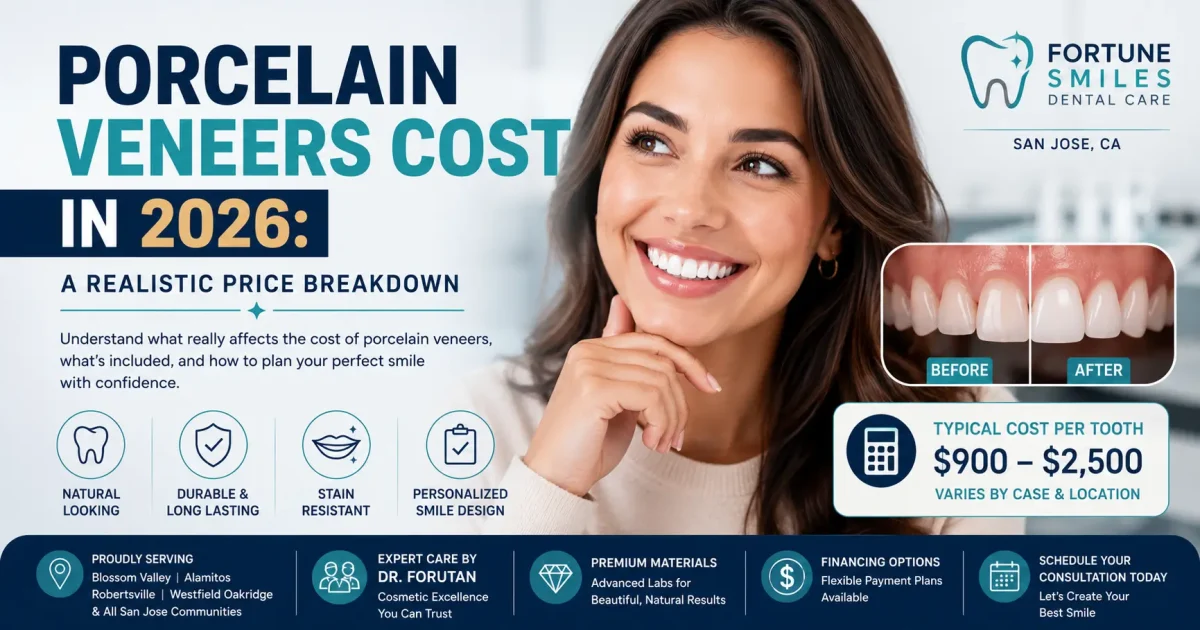
In 2026, porcelain veneers in the U.S. commonly range from about $900 to $2,500 per tooth, depending on the dentist’s experience, case complexity, materials, lab quality, location, and whether additional treatments are needed. In larger metro areas such as San Jose and Silicon Valley, the final investment may vary based on the level of customization and cosmetic planning.
Porcelain veneers are one of the most requested cosmetic dentistry treatments because they can create a brighter, more balanced, and more confident smile. They may be used to improve stained teeth, chipped teeth, worn edges, small gaps, uneven shapes, and mild cosmetic alignment concerns.
However, veneers are not a one-size-fits-all treatment. The final cost depends on your smile goals, how many teeth are treated, the condition of your natural teeth, and the quality of the cosmetic planning involved.
At Fortune Smiles Dental Care, patients from San Jose, Blossom Valley, Alamitos, Robertsville, and areas near Westfield Oakridge often ask for a realistic breakdown before deciding whether porcelain veneers are right for them.
This guide explains what affects porcelain veneer pricing in 2026, what is usually included, what extra costs may appear, and why choosing an experienced cosmetic dentist matters.
How Much Do Porcelain Veneers Cost in 2026?
Most porcelain veneer cost estimates in the United States fall somewhere between $900 and $2,500 per tooth. Some sources show similar national ranges, with porcelain veneers often estimated around $925 to $2,500 per tooth, depending on the provider and case.
That means a patient getting one or two veneers for a chipped front tooth will have a very different total cost than someone planning a full smile makeover with 8 to 10 veneers.
A realistic 2026 price breakdown may look like this:
| Treatment Type | Typical 2026 Range | Best For |
|---|---|---|
| Single porcelain veneer | About $900–$2,500 per tooth | One chipped, stained, or uneven tooth |
| 4 porcelain veneers | About $3,600–$10,000 | Front smile zone improvement |
| 6–8 porcelain veneers | About $5,400–$20,000 | Smile makeover cases |
| 10+ porcelain veneers | Often $9,000–$25,000+ | Full cosmetic transformation |
These numbers are general estimates. Your actual cost can only be determined after a consultation, dental exam, and cosmetic treatment plan.
Why Veneer Pricing Varies
What Is Usually Included in the Cost of Porcelain Veneers?
Porcelain veneers are more than thin shells placed on teeth. A high-quality veneer case usually includes several planning and treatment steps.
Depending on the office, the total cost may include:
- Cosmetic consultation
- Smile evaluation
- Photos and digital scans
- Treatment planning
- Tooth preparation if needed
- Temporary veneers
- Custom porcelain restorations
- Dental lab fabrication
- Final bonding appointment
- Bite adjustment and follow-up
Some practices may price these steps separately, while others include them in the total treatment plan. This is why comparing only the “per tooth” price can be misleading.
Main Factors That Affect Porcelain Veneer Cost
1. Number of Veneers Needed
The number of veneers is one of the biggest cost drivers. Some patients need only one veneer to match a damaged tooth. Others want 6, 8, or 10 veneers to improve the entire visible smile zone.
For many smile makeover cases, the upper front teeth are the priority because they show most when smiling. However, some patients may also need lower veneers depending on their bite, tooth wear, and smile goals.
2. Material Quality
Not all porcelain is the same. Premium porcelain and ceramic materials can offer better translucency, durability, and natural light reflection. A high-quality veneer should not look flat, bulky, or artificial.
The material selected may depend on your tooth color, bite, enamel thickness, cosmetic goals, and whether the case requires strength, translucency, or both.
3. Cosmetic Dentist Experience
Experience matters in veneer treatment. Porcelain veneers require both technical skill and artistic judgment. The dentist must understand tooth proportions, facial balance, gum line, smile width, bite function, and natural shade design.
A lower-cost veneer may seem appealing at first, but poor planning can lead to bulky veneers, mismatched shades, gum irritation, bite problems, or early replacement.
4. Dental Lab Quality
Porcelain veneers are often crafted by skilled dental ceramists. The quality of the lab can significantly affect the final appearance. Custom shade layering, surface texture, edge design, and translucency all influence whether veneers look natural.
5. Additional Dental Treatments
Before veneers are placed, some patients need other dental work. This may include whitening, gum treatment, replacing old fillings, treating cavities, Invisalign, or bite correction.
For example, patients with alignment concerns may need to consider clear aligners first. If you are comparing alignment and cosmetic options, the guide on
Invisalign treatment
can help you understand when tooth movement may be recommended before veneers.
Porcelain Veneers vs Composite Veneers Cost
Composite veneers are usually less expensive upfront than porcelain veneers. However, porcelain veneers often offer better stain resistance, durability, and long-term aesthetics.
| Feature | Porcelain Veneers | Composite Veneers |
|---|---|---|
| Typical cost | Higher upfront investment | Lower upfront cost |
| Appearance | Very natural and translucent | Good, but may look less lifelike over time |
| Stain resistance | Excellent | More likely to stain |
| Longevity | Often longer lasting with proper care | May need earlier repair or replacement |
| Best for | Premium smile makeovers | Small repairs or budget-conscious cases |
If you are deciding between bonding and veneers, this internal guide may help:
Teeth Bonding vs Veneers.
Does Insurance Cover Porcelain Veneers?
In most cases, dental insurance does not cover porcelain veneers because they are considered cosmetic treatment. Insurance plans usually focus on procedures that are medically necessary, such as treating decay, infection, broken teeth, or gum disease.
However, there may be exceptions if a veneer is part of restoring a damaged tooth after trauma or correcting a functional problem. Coverage depends entirely on your specific insurance plan, documentation, and diagnosis.
Before starting treatment, it is best to review your benefits and ask the dental office to help you understand what may or may not be covered.
Are Porcelain Veneers Worth the Cost?
Porcelain veneers can be worth the investment for patients who want a long-lasting, natural-looking cosmetic improvement. Unlike whitening, which mainly improves tooth color, veneers can improve several smile concerns at once.
Porcelain veneers may help improve:
- Deep discoloration
- Worn or short teeth
- Small chips and cracks
- Uneven tooth shapes
- Small gaps
- Mild cosmetic misalignment
- Smile symmetry
When Veneers May Be a Smart Investment
Hidden Costs Patients Should Ask About
When comparing porcelain veneer prices, it is important to ask what is included in the estimate. A very low advertised price may not include everything needed for a high-quality result.
Potential additional costs may include:
- Initial consultation
- X-rays or digital scans
- Diagnostic wax-up or smile preview
- Temporary veneers
- Gum contouring
- Teeth whitening before veneers
- Replacement of old fillings
- Nightguard for patients who grind
- Follow-up or adjustment appointments
Patients who grind or clench may need a protective nightguard after veneers. This helps reduce the risk of porcelain chipping and protects the investment long-term.
How Long Do Porcelain Veneers Last?
With proper care, porcelain veneers can last many years. Their longevity depends on oral hygiene, bite forces, material quality, placement technique, and patient habits.
To help veneers last longer:
- Brush and floss daily
- Schedule regular dental checkups
- Avoid biting hard objects
- Wear a nightguard if you grind your teeth
- Limit habits like nail biting or chewing ice
- Maintain gum health
Porcelain is stain-resistant, but natural teeth around the veneers can still change shade. This is why good maintenance and routine dental visits are important.
Why Cheaper Veneers Can Cost More Later
Choosing veneers based only on the lowest price can be risky. Poorly planned veneers may look bulky, unnatural, too opaque, or mismatched with surrounding teeth.
Low-quality veneers may also create functional problems if the bite is not properly checked. If veneers are too thick or placed without attention to chewing forces, they may chip, loosen, or cause discomfort.
A realistic veneer investment should include careful planning, high-quality materials, proper bonding technique, and a dentist who understands both aesthetics and function.
A Good Veneer Result Should Look:
Porcelain Veneers Cost in San Jose: Why Location Matters
The cost of porcelain veneers can vary by region. In larger metro areas like San Jose and Silicon Valley, pricing may reflect higher operating costs, advanced technology, premium dental labs, and demand for high-quality cosmetic dentistry.
Patients from Blossom Valley, Alamitos, Robertsville, and the Westfield Oakridge area often seek veneers because they want natural, professional-looking results that fit their lifestyle and facial aesthetics.
A realistic consultation should include a discussion of goals, number of teeth involved, smile design, material options, and long-term maintenance.
Why Choose Dr. Forutan for Porcelain Veneers?
At Fortune Smiles Dental Care, the team is more than a group of dental professionals. They are a family of dedicated individuals with a shared passion for creating healthy, confident smiles.
Led by the esteemed Dr. Forutan, the practice embodies comprehensive and gentle care. With years of collective experience and a commitment to ongoing education, the team stays at the forefront of modern dental advancements.
Dr. Forutan’s approach to cosmetic dentistry is patient-centered, detailed, and focused on long-term oral health. Every veneer case is planned around the patient’s facial features, smile goals, tooth structure, bite, and gum health.
Whether you are visiting for a routine check-up, biomimetic restoration, cosmetic smile makeover, safe amalgam removal, Botox therapy, or porcelain veneers, you can experience the difference that thoughtful and personalized dental care makes.
For patients interested in a broader cosmetic plan, the article
Combining Veneers, Bonding, and Aligners for a Full Smile Makeover
explains how multiple treatments may work together.
Want a Personalized Veneer Cost Estimate?
Schedule a cosmetic consultation with Dr. Forutan at Fortune Smiles Dental Care to learn how many veneers you may need, what results are realistic, and what your treatment investment may look like.
Frequently Asked Questions
How much do porcelain veneers cost in 2026?
Porcelain veneers often range from about $900 to $2,500 per tooth in the United States. The final cost depends on the number of veneers, material quality, dentist experience, lab customization, and case complexity.
Are porcelain veneers covered by insurance?
Most insurance plans do not cover porcelain veneers because they are usually considered cosmetic. Coverage may vary if veneers are part of restoring a damaged tooth.
How many veneers do I need?
Some patients need only one or two veneers, while others choose 6, 8, or 10 veneers for a full smile makeover. The right number depends on your smile width, goals, and visible teeth.
Are porcelain veneers worth the cost?
Porcelain veneers may be worth it for patients seeking long-lasting cosmetic improvement, natural appearance, stain resistance, and better smile symmetry.
How long do porcelain veneers last?
With proper care, porcelain veneers can last many years. Longevity depends on oral hygiene, bite forces, material quality, and regular dental maintenance.